AI is the new access: why owning the app is no longer enough
by Ben Caveen | 31 Mar 2026

For years, the app sat at the center of the customer relationship. Building a strong experience and driving downloads gave you a direct and persistent line to your customer, sitting in their pocket, billing quietly each month and reinforcing the idea that the app was the primary way to access and manage the service.
That front door is starting to break under pressure.
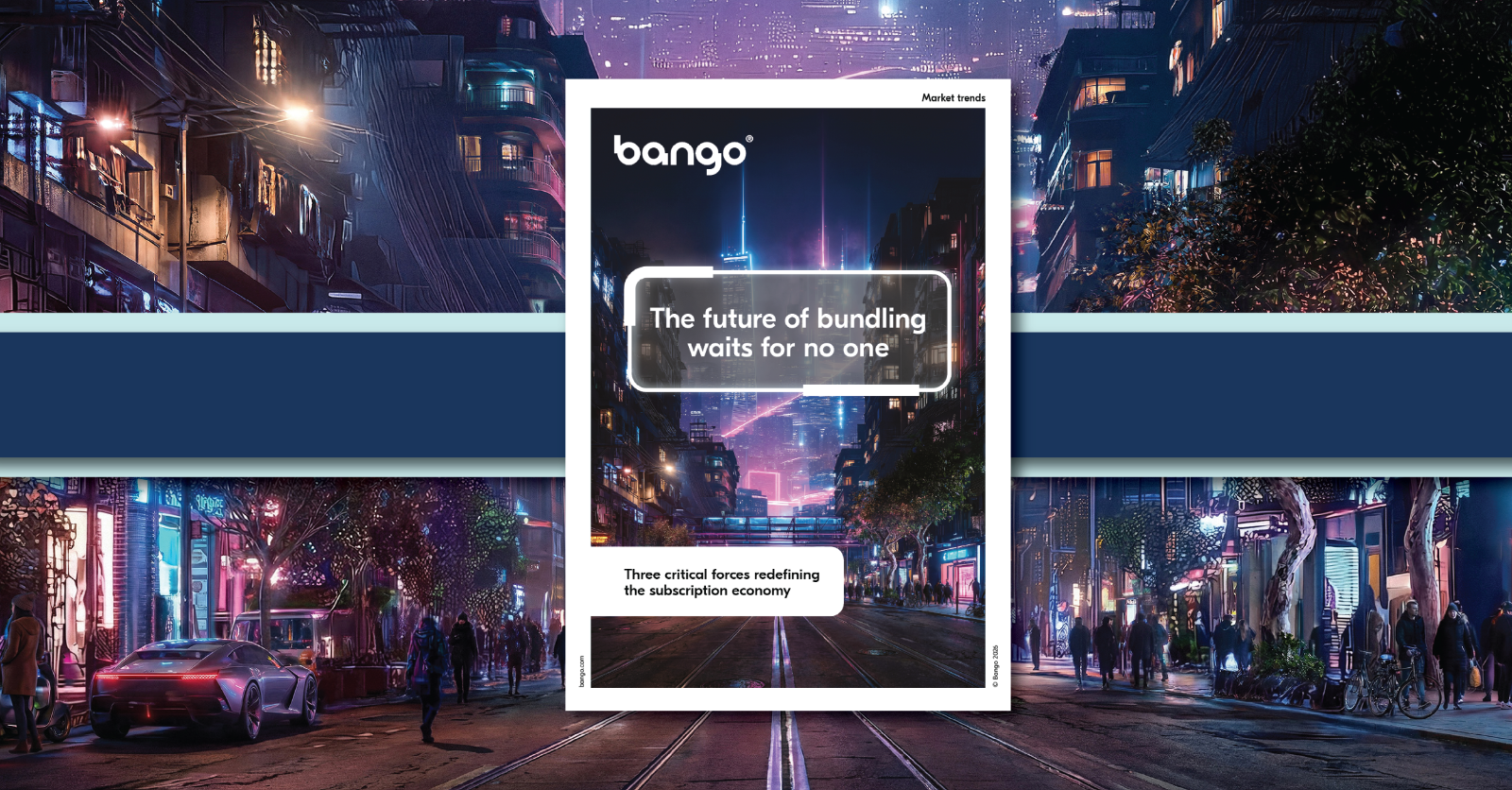
The second force in the latest report from Bango ‘The future of bundling waits for no one’ is simple but far-reaching: AI is becoming the new access layer. Discovery is moving away from search, scrolling and app-hopping, toward a single prompt answered by an intelligent layer that can also handle sign-up, entitlement and payment.
This changes the battleground entirely, because success is no longer defined by what happens inside your app but by whether your service can be found, understood and activated when the customer never opens it at all.
The app is no longer the only front door
Consider how people choose what to watch on a Tuesday evening, where the starting point is rarely opening multiple streaming apps to compare catalogues but instead expressing intent through a question like “what should I watch tonight?” or “find me something like Stranger Things.”
That intent is increasingly answered by an intelligent layer that does not prioritize brand but focuses on delivering the best match to the request regardless of where the content lives.
The data from our report supports this shift, with more than half of Americans (58%) saying they do not care which service a show, film, game or song comes from because their priority is the content itself and when that is combined with recommendation-led viewing and hands-free access the conclusion becomes difficult to ignore.
AI is moving from discovery to action
Today, AI is already reshaping discovery and recommendation. The next phase is decision support, comparing services, highlighting value and guiding users toward the best option.
Probably, over time, the same layer that recommends will increasingly handle activation, bundling and subscription management.
As a result, the effort that once sat with the customer begins to move upstream into the system itself. Tasks such as tracking subscriptions, remembering logins and evaluating value at renewal were previously accepted as part of the experience, but they are now being absorbed by a layer designed to remove that complexity.
Consumers are already signaling their readiness for this transition, with one in five Americans willing to let AI subscribe, manage and cancel services on their behalf, rising to 40% among Gen Z and 47% among those already paying for AI tools. At the same time, more than a quarter would pay a premium for a platform that includes an AI agent to secure better deals, while 34% say they would prefer a single AI interface over managing multiple apps.
Visibility becomes the new competition
As access becomes mediated, the relationship between customer and service begins to change, because customers no longer navigate directly to platforms but instead rely on an intelligent layer that determines what gets surfaced and what does not.
This introduces a new form of competition, where success depends less on the quality of the app itself and more on whether a service can operate effectively within that access layer. Being easy to interpret, easy to activate and available in real time becomes critical, because if any part of that chain fails, the service simply drops out of consideration.
This is where the challenge becomes operational rather than purely experiential. Getting recommended is only one part of the equation, while converting that recommendation into seamless, real-time activation across partners, pricing and entitlements is significantly more complex. The constraint is no longer content alone, but the ability to function within an interconnected ecosystem.
Trust will decide who gets to manage subscription life
If AI is going to sit between consumers and their subscriptions, managing access and making decisions on their behalf, then trust becomes the most important currency in the room. And when you look at who consumers actually trust to play that role, one category stands out clearly. In the US, the most trusted providers for an AI subscription manager are telcos, including mobile, broadband and cable providers, with 52% agreement and a meaningful lead over retailers and social platforms.
That trust has been earned over a long time, often quietly. Telcos already sit in a position of daily utility in most households, handling the connectivity that everything else runs on. They have established billing relationships, they know the customer, they handle support when things go wrong, and they are already woven into the device and connectivity layer that powers digital life.
In an AI-led subscription world, that combination is not just an advantage but a foundation to build on, provided they move quickly enough to use it. If they do not, the access layer does not disappear. It just gets owned by someone else, and that someone else takes the customer relationship along with it.
What this means now
The real shift is not from apps to AI but from direct control to mediated access. As agent-led discovery grows, indirect distribution stops being a secondary growth lever and becomes a critical channel for scale. Subscription services that are not present in these pathways risk becoming invisible at the moment of decision.
For content providers, the work is to become genuinely agent-ready, which means being easy to understand, easy to activate, easy to bundle and easy to justify at the moment a customer asks a simple question from their sofa.
For telcos, platforms and aggregators, the opportunity is considerably larger, because controlling the interface for discovery and frictionless access means moving to the center of the customer relationship, with stronger retention and new revenue streams built around the next phase of the subscription economy.
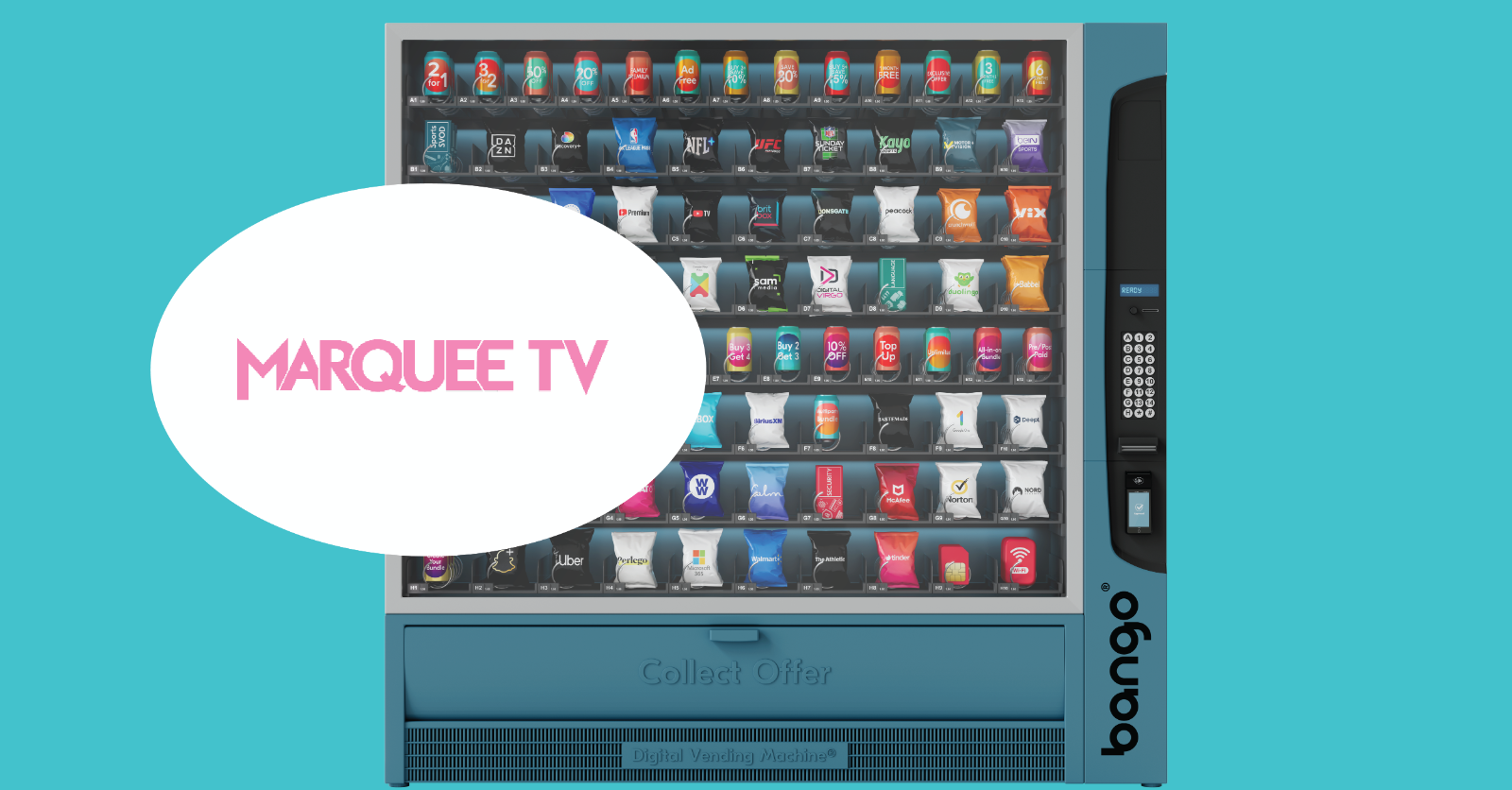
That future will not be assembled through fragmented one-to-one integrations but will need an operating layer that connects identity, entitlement, usage, offers and payment across multiple services and partners at scale, which is exactly the role the Digital Vending Machine® (DVM™) from Bango is built to play.
The takeaway is simple: do not just be app-ready, be agent-ready.
And the question now is not whether AI will sit between you and your customer. It is whether you will still be visible when it does.