The race telcos are losing: Why connectivity alone can’t sustain your future revenue
by Richard Hynes | 24 Feb 2026
Telcos carry huge costs of rolling out infrastructure, only to find technology cycles shorten and expectations rise. Consumption and demand for data continues to grow, whilst prices continue to fall in the market – telcos, must be unique – normally higher consumption leads to higher prices. A plan based on $20 per month can quickly become a race to the bottom. While technology marches forward, customers expect an ever greater digital experience, without an increase in the price.
But most of all, it’s a business where most value flows through the pipes – not back to the telcos that built them.
In this article – part 1 of a two-parter exploring how telcos fit into today’s value stack – you’ll see the size and shape of the problem, before driving towards a solution in part 2. The key takeaway for telcos looking to the future: yes – there is a future. And it’s bright.
Pain #1: The pricing paradox
Today, connectivity is treated like a utility: people expect costs to reflect usage. Charging your EV will spark higher bills; spend summer watering your lawn and dollars will flow out of your account; leave the heating on all day and see your gas bill ignite. Consumers complain – but they understand the principle: user pays.
So, how in telecoms, have we become accustomed to prices reducing but allowances increasing – every year the expectation is for lower cost mobile plans.
Of course, the usage profile differs. There’s only so much water you can shower with, but hunger for bandwidth has no upper limit. Streaming video went from 1024 pixels to 4k, with 8k knocking at the door; gamers expect terabytes of files to update overnight; families expect a dozen devices to share a single connection.
But if you had to name one problem that keeps telco commercial departments awake at night, it’s this – structurally pressured ARPU that’s pushed the industry into a cycle of margin erosion and recurring cost crises. Predictable ARPU is relied upon to support network investment, with a constant decline in ARPU, but increasing network costs – telcos are struggling.
So how can telcos persuade customers that their service is core to their life, something that stays front-of-mind with high perceived value? The clues are coming. But first let’s look at the legacy issue.
Pain #2: The sunk costs of legacy systems
The tech industry celebrates software: startups that can turn on a dime, small teams that build big platforms fast. But “Big Telco” is, above all, a story of infrastructure. From copper cables and radio masts to optical fiber and 5G telephony, making money means eking out every cent of profit from installed equipment before Moore’s Law forces a rip-and-replace.
This enabler of the global information economy is, at heart, still a business that involves digging ditches and stringing poles. And that carries more friction than writing a few lines of code.
So every decision in a large telco is a careful balance of expected utility over sunk cost. Can a network switch offer acceptable QoS for one more year, to justify its $2m sticker price? Will a cabling upgrade justify $2bn of downside before we have to do it all again? What if a new innovation makes $10bn of glass-in-the-ground obsolete overnight?
Decisions like these take hard thinking, because they cost real money. And that’s our clue to solving this issue: find a way to add value to the infrastructure that doesn’t tie up a thousand engineers and vehicles for two years. With that in mind, let’s move on to commoditization.
Pain #3: Commoditization stopping monetization
All clothes do is keep us warm and dry, yet clothing is never viewed as the same wherever you buy it. The same size apartment in two areas of town commands hugely different prices. And while their sole purpose is to take you from A to B, cars remain a deeply personal purchase. In countless industries, vendors successfully resisted their products and services becoming commoditized.
Yet bandwidth – arguably the most vital, personal, and non-negotiable part of modern life – is frequently seen as interchangeable between providers, piled high and sold cheap. So how did connectivity become so hard to monetize?
The reasons are historical. For many decades, connectivity was only available from a single source; many providers had no brand identity beyond “the phone company”, and didn’t need one. Today, consumers have more choice than ever … but they still see it as a commoditized service, the same whoever you buy it from. And they’re (mostly) right.
This might seem impossible to overcome. A broadband connection can feel like wallpaper, invisible and logo-less, with no obvious way to differentiate a brand … isn’t it? As you’ll see later, that view is false. There are ways for telcos to forge a distinctive brand and stronger customer relationships – but for now, let’s look at another sticking point.
Pain #4: A fixed point on the value chain
Global spend on digital content has soared, with billions flowing into the hands of Apple, Google, Microsoft, Netflix, Disney, and many others. Consumers today put their subscriptions front and center, caring deeply about what’s new and what’s on; entertainment, productivity, gaming, fitness, cloud storage, education, social, and new applications – the list grows every year.
Yet most telcos, despite enabling every connected moment, capture almost none of this value. They carry the traffic, power the devices, enable the experience, yet stay “stuck”, unable to participate in the revenue streams that increasingly define digital life.
Consumers have shown what they’re willing to spend on: stuff that entertains, meaningful experiences, helpful ways to learn new skills and get their tasks done. Since it’s a telco that brings that content to their devices, telcos are well positioned to capture more of that value – and part 2 will present the ways. Now let’s look next at culture.
Pain #5: Dealing with a hard-to-change culture
While many telcos once enjoyed monopoly power, it wasn’t all sunshine and roses. It got the world’s population connected, but also embedded a mindset: reliability fist, innovation second. Our mindset is baseline QoS, not customer delight. “I have to phone customer service” became shorthand for friction and wasted time, and telcos are still working to change that perception. And organizational structures built for that era are still the norm.
But there’s a hidden opportunity here: companies with a focus on connecting the customer – like telcos – are vital to those value-adding companies upstream. Every content provider, every streaming service, every lifestyle application relies entirely on a reliable broadband link between their product and their customer.
And their customer is – guess what? – your customer. We believe that’s the real cultural change telcos need to make: seeing themselves as the true enablers of the customer experience. Doing so doesn’t need telecoms giants to behave like startups or adopt Silicon Valley slang; indeed, it makes use of skills and experience they already have. And we’ll show you how. But before that, our last pain point.
Pain #6: Cost-cutting as substitute for shareholder value
Of course the above problems aren’t news. Every telecoms conference contains long sessions discussing a telco’s place in the value stack and how to change it. But with many telcos being public companies and investors rooting for margins, the solution for staying profitable is often “cut more costs”.
Yet cutting costs is, in truth, the greatest threat of all – because it risks staying “just a pipe”. Perhaps you can shave another percentage point off annual maintenance, reduce the headcount at the Helpdesk, delay network upgrades another year or two. But ultimately that’s just delaying the same structural challenge.
By remaining solely focused on connectivity, telcos risk being judged solely on connectivity – with revenue per customer priced accordingly. But with the digital value chain expanding and consumers hungry for services with money to pay for them, today’s telco isn’t just a connectivity provider – it’s a distribution partner. And that’s the key.
The path forward: Capturing more from the digital value chain
The telecoms sector has a legacy of resilience, reinventing itself through technological shifts, regulatory change, and competitive disruption. Today, the challenge is not network evolution, but business model evolution. And Bango would like to help.
Imagine your telco being able to:
- Offer value-added services, in distinctive bundles that build your brand
- Act as distribution partner for hundreds of content creators and services
- Launch and scale digital offers without vast infrastructure investment
- Monetize your customer base by acting as a scaled distributor for content providers
- Create customer delight by reducing the frictions of separate subscriptions
This is it, telcos. How you reclaim relevance and capture value. This is how you participate in the digital economy, rather than powering it from the sidelines. The subscription economy is exploding, and telcos are uniquely positioned to own more of it. But before we move onto part 2, here’s a taste of the solution.
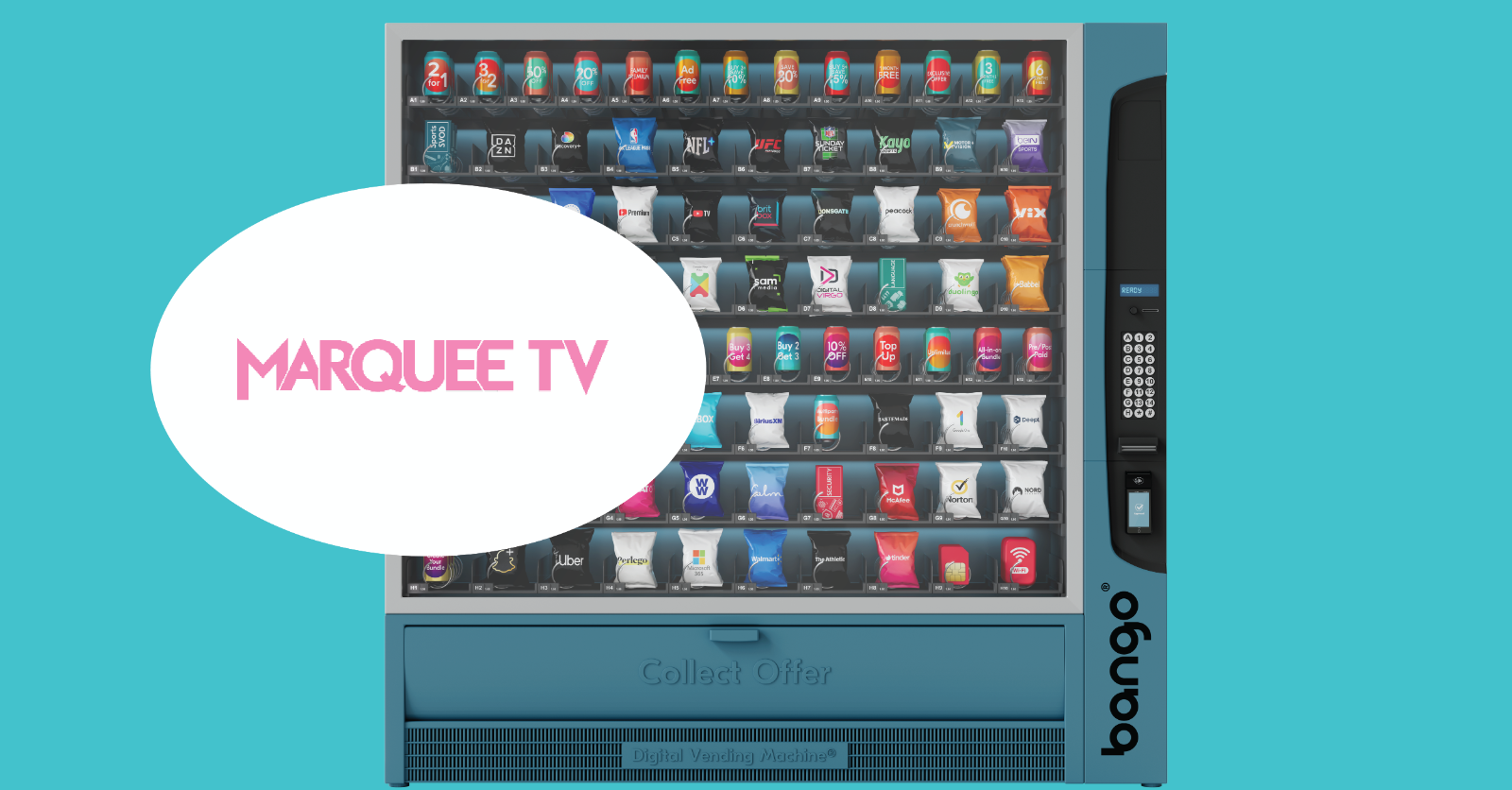
The Digital Vending Machine® (DVM™) : The missing capability – a platform for subscription bundling at scale.
The Bango DVM provides the prebuilt infrastructure telcos need to participate fully in the digital value chain. It’s a single platform for building, launching, managing and billing custom-created content subscriptions at scale, with the back-and-forth between third-party content providers dealt with seamlessly: without turning every new bundle into a multi-month systems project.
Bango already supports subscription bundling at scale for leading brands globally, including national operators. And we’d like you to join them.
Six big pain points, but a far bigger opportunity
The future belongs to telcos who expand their role in the digital economy. The Bango DVM is how they get there – faster, with less risk, and with far greater control over the revenue that will define their next decade. Bango is ready to make that future real with you. That’s what we’ll explore in part 2 – taking the doom and gloom above, and turning it into boom and room to grow. Of course, if you’re too excited to wait, contact Bango now.