Three forces reshaping the bundling market
by Marta Trias Gray | 11 Mar 2026
For more than a decade, content providers and telcos have worked hard to get closer to the customer. Content brands built direct platforms to protect margin and own the data. Telcos expanded beyond connectivity, adding streaming, gaming and digital services to increase retention and grow lifetime value. Those investments were not small, and they were not accidental. They were built on the belief that controlling the customer relationship would protect long-term growth.
But what if the rules that made that strategy work are beginning to shift?
Consumers are not walking away from subscriptions. They are rethinking how they value them, how they manage them and who they trust to organize them.
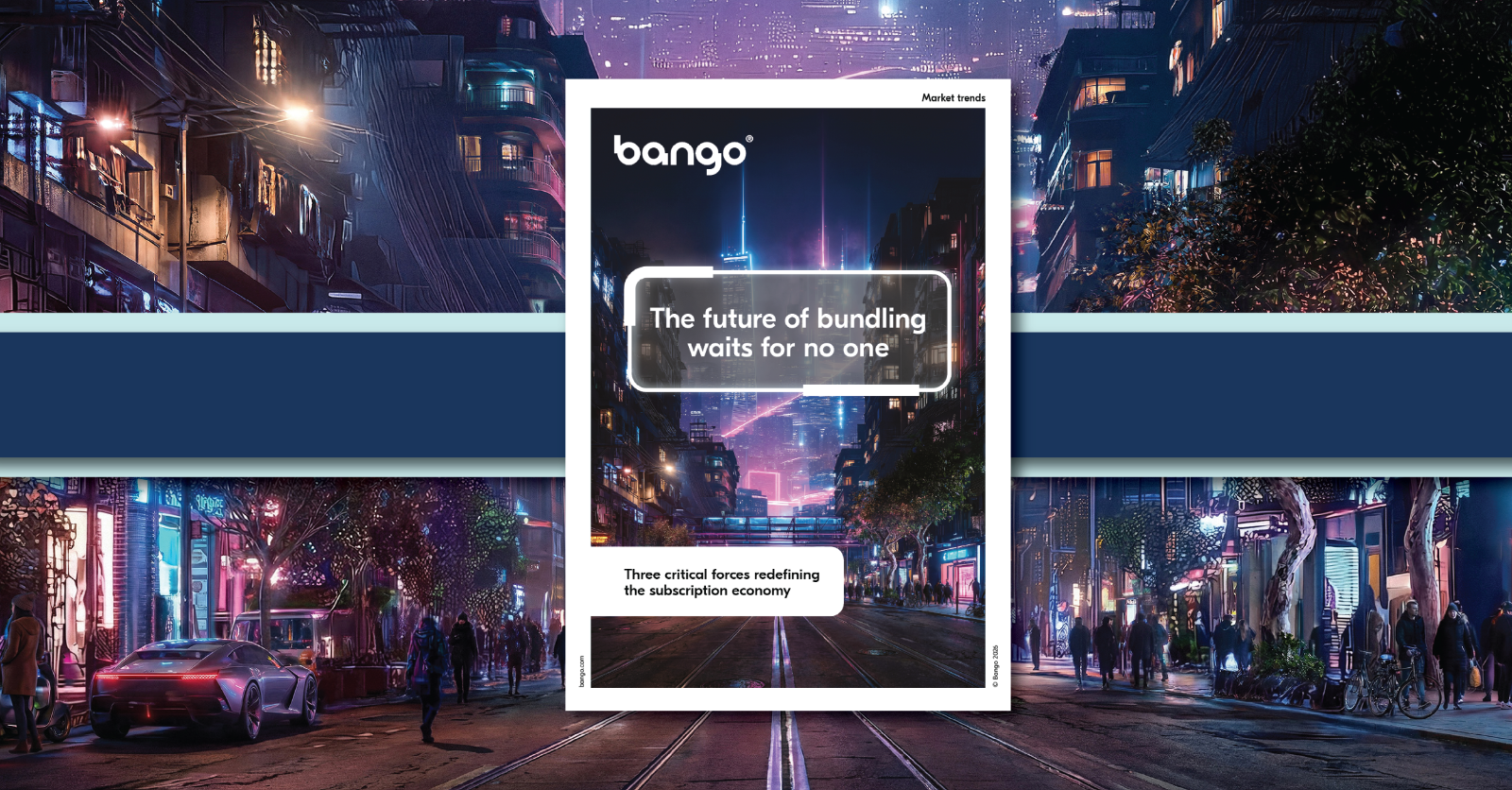
In our newly released report, The future of bundling waits for no one, based on research with 4,000 consumers across the US and UK, we identify three forces emerging directly from shifting consumer behavior:
- Dynamic payment: beyond the monthly fee
- New discovery: AI becomes the access layer
- Market split: bundle or be bundled
Each of these forces originates with the consumer and each one carries strategic implications for revenue, margin and positioning.
Dynamic payment: beyond the monthly fee
43% of US consumers say they feel they waste money on subscriptions because they pay for a full month but only use a service occasionally. That number tells us something important: the traditional monthly fee does not always match how people actually consume. Consumers increasingly think in terms of time spent rather than entitlement owned. Viewers binge when content drops then step back. Gamers engage intensely around launches then go quiet. When billing stays static while behavior fluctuates, perceived value weakens.
That gap opens the door to models that align pricing more closely with engagement. Imagine a service called OneEntertain: a single $50 subscription covering all your streaming services. One subscription, one payment, no juggling apps or separate renewal dates. Behind the scenes, usage is measured and revenue allocated across providers based on consumption, so payment reflects actual value delivered. It is a model where time is embedded into commercial design and even gamified to reinforce a sense of fairness.
For content providers, that kind of flexibility introduces complexity around pricing stability and revenue forecasting.
For telcos, managing billing and entitlements across multiple services becomes even more central to the proposition. The companies that can support flexible models across their partner ecosystems position themselves at the heart of how consumers experience subscriptions.
New discovery: AI becomes the access layer
Consumers are also showing clear signs of fatigue with managing fragmented subscriptions. 26% of US consumers say they would allow AI to choose their subscriptions if it saved them money. 25% would let it switch services on and off automatically based on usage. Among Gen Z that openness rises to 44%.
If an AI system is optimizing a consumer’s subscriptions for value, deciding which services stay active and which get paused, how much control does a brand retain over its own visibility? Acquisition campaigns still matter but ongoing inclusion increasingly depends on placement within the orchestration layer.
For content providers that introduces real exposure to environments they do not fully control.
For telcos and aggregators it strengthens the case for owning the platform where subscriptions are surfaced, adjusted and renewed.
Market split: bundle or be bundled
31% of US consumers say they are done with standalone subscriptions. Consumers still want great services. What they increasingly refuse to manage is the fragmentation that comes with them.
For content brands, joining a bundle expands reach but reduces control over pricing and customer data.
For telcos, bundling reinforces their role as gateway to the customer, if the experience holds up commercially and operationally.
The market is dividing between companies that lead bundled ecosystems and those that participate within them. That distinction will define competitive positioning for years.

Bundling is no longer a promotional mechanic. It is becoming the primary way subscriptions are organized and experienced. The full report explores how these three forces are developing, what younger generations signal about where this is heading and what it means for long-term strategy.
The question is simple: are you building the bundle or becoming part of someone else’s?
Download the report to understand how these forces are converging and what that means for your strategy over the next three years.