What’s in store for 2026? Top bundling and subscription trends to watch
by Giles Tongue | 07 Jan 2026
With 2025 behind us, we take a look at what’s set to shape 2026.
One of the consistent predictions for 2025 was that of expected consolidation, through mergers and acquisitions. While rumour exceeded activity, the only major move that started in 2025 was the potential Warner Bros. sale to either Netflix or Paramount. No doubt more will follow.
Consolidation was supposed to provide simplicity.
Instead, we saw an increase in the number of products being offered – with the rebirth of ad tiers, the amount of product options available increased, rather than decreased.
But what we saw last year, is a fundamental growth in the use of indirect channels, which will only increase in 2026, as brands with subscription products look for ways to acquire and retain customers, while resellers like telcos, retailers and banks search for ways to drive up revenues by acquiring and retaining customers.
So here are some predictions for 2026.
Once upon a time, to buy a subscription meant going to the app store or a brand’s website. Now, subscriptions are available from a multitude of different sources – included in your mobile plan, or with your bank account, or included with another service like food delivery.
In our ‘Subscriptions Assemble’ survey, we found that subscribers in the US have an average of 5.4 subscriptions, 2 of which (30%) are through indirect channels, the most common subscription being Subscription Video on Demand (SVOD) (e.g. Netflix). This is consistent with Omdia data which showed this year that 30% of all SVOD globally, is now sold through indirect channels, mostly telco.
With this is the rise of the ‘Savvy Subscriber’ – who much like other forms of retail, shop around for the best deal – the lowest price, the longest trial period, the best combination of bundles.
The flip side of this is we also see the ‘Forever Subscription’ – 70% now have at least one subscription they will never cancel. Subscriptions are becoming essential components to our daily lives.
We’re expecting the use of the indirect channel to increase in 2026, and include more subscription product categories.
A major partnership which didn’t materialize in 2025 was VENU Sport – a proposed joint venture and product collaboration between ESPN, Fox and Warner Bros. This was challenged in court and by competitors and eventually in January of this year the venture was abandoned.
Instead, months later, Fox One launched, bringing together sports (and other) channels and content of the Fox networks into a single SVOD service.
At launch Fox One was immediately available with a bundle offer with Fox Nation or including ESPN from Disney. ESPN also sold this bundle with Fox Nation.
This was the only major Sports SVOD launch of the year and demonstrated how to utilize indirect channels to maximize a launch – we covered this in detail here.
In 2026, we expect to see a continuation and growth of co-opetition and bundling. Fox One and ESPN is a great example of a multi-product bundle along with Netflix and HBO Max through Verizon in the US.
And this is not confined to the US – in the middle east Netflix with Shahid, and more recently Disney+, OSN+ and Shahid in a first if its kind 3 for 2 offer.
Bundles can be great for reaching and acquiring new customer segments and entering new geographies and often result in a stickier customer because of the higher value offered over single individual subscriptions.
We can expect to see more collaborations of content provider with content provider bundling partnerships in 2026.
Bricks and mortar (or ‘traditional’) retailers have been behind the curve when it comes to subscriptions – some bundles are available through loyalty schemes such as Walmart+ offering Peacock and Paramount+ and Continente in Portugal offering Disney+ (see here).
However, retailers selling subscriptions and offering bundles is still uncommon. Partly this comes from the complexity of needing a customer ID and a card on file to charge the subscription, plus the technical infrastructure required to place a recurring charge; a month after month payment for services.
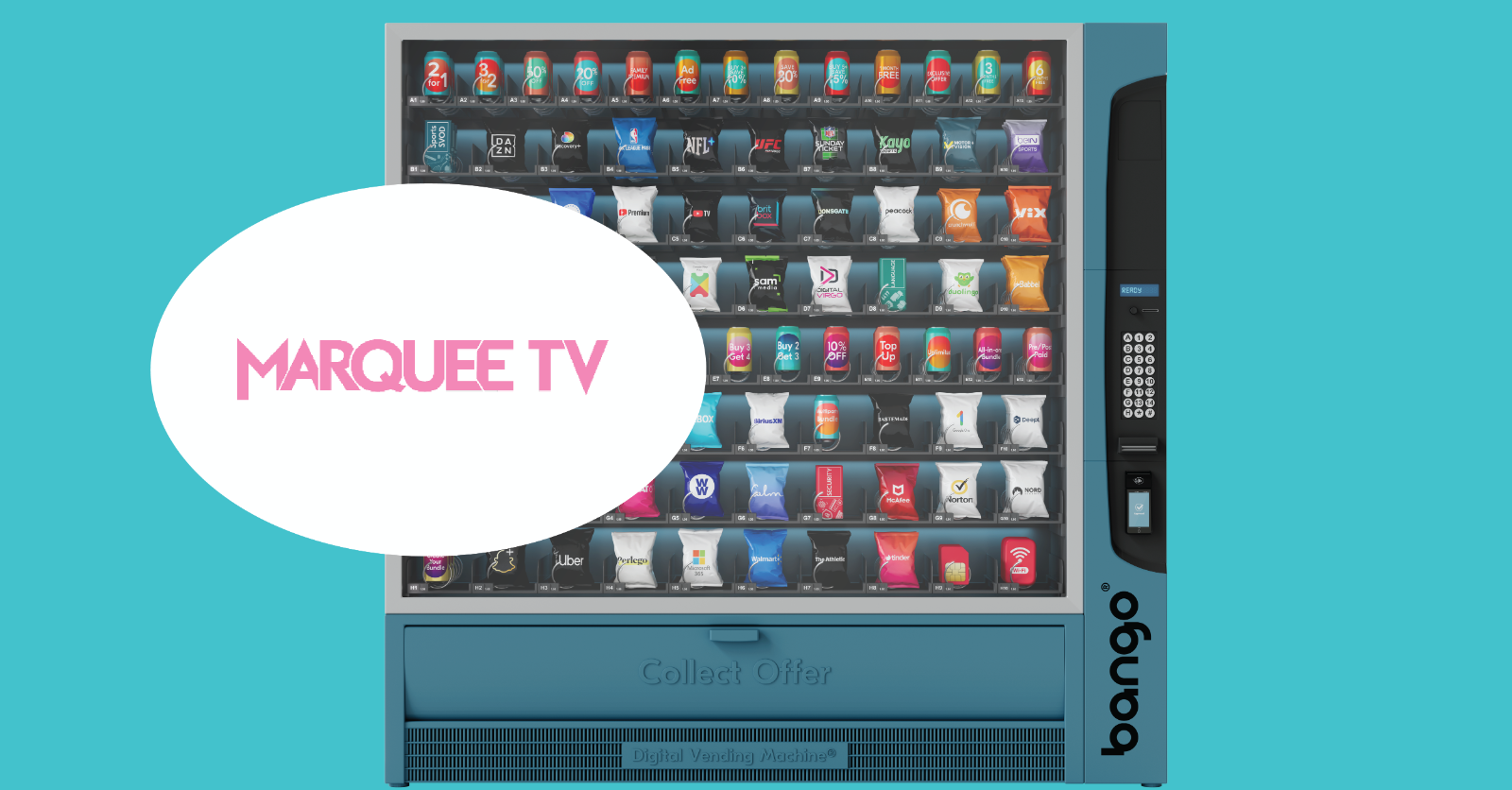
These are challenges that can be handled by products such as the Digital Vending Machine from Bango. However, what retail has really missed is a trigger moment to pull them into bundling.
A recently announced partnership between InBev and Netflix however could turn out to be such a catalytic event. InBev, owner of famous global brands such as Budweiser, Corona and Stella Artois, have now entered an agreement:
“Our partnership is multilayered and will come to life through co-promoted shows, live events, limited-edition packaging and more”.
Retailers will see this partnership as a huge opportunity to drive sales, and will no doubt be exploring ways in which to maximize promotions through their outlets. One can easily imagine aisle end and front of store promotions that include on pack competitions, giant cut outs of famous characters and titles such as Stranger Things, and the sale of related merchandize. It isn’t a huge leap of imagination to consider retailers exploring the selling subscriptions of related products and adjacent categories.
So, watch out for retailers leaning into subscription products in 2026.
Leading the way with bundling in fintech is Revolut, whose highest priced monthly tiers include up to £4,250 of bundled products.
As we discovered in our ’Loyalty pays‘ report, banking customers are among the most loyal – some staying with their banks for 25 years or more, however bundling can be used to disrupt this inertia as both an acquisition tool and a retention tool. In fact, 48% of 18–34-year-olds would switch banks for subscription bundles that cut costs and simplify account management.
With a very agile and progressive set of neo and digital banks, bundling through financial services is set to be a big growth area for subscription brands in 2026.
Talking of Revolut, as 2025 comes to an end, they announced an amazing mobile service: £12.50 (rising to £15) a month, for unlimited 5G, calls, texts and 20GB roaming in EU and USA, plus a bundled VPN from Express VPN.
However, its not only financial services providing mobile services.
In the US, Mint Mobile, backed by Ryan Reynolds (Deadpool), has already grown and exited to T-Mobile in 2023, which has shown the blueprint for other celebrity endorsed mobile orientated brands.
In 2025 we saw Trump Mobile and Smartless (Jason Bateman, Will Arnett, and Sean Hayes) offer mobile services.
In 2026 we can expect celebrity endorsed services. One eye-catching entrant could be MrBeast, the leading content creator, who has registered his brand. If he could convent just 1% of his 450M subscribers, he’s already a major player with 4.5M mobile customers.
By establishing a basis for recurring payment, he’s then in a great position to offer other bundles, opening up all sorts of interesting content from the creator economy. He’s also rumoured to be looking at complimentary fintech serivce.
Look out for MVNOs from celebrities in 2026.
The rise of the MVNO, the introduction of celebrity brands and fintech offering connectivity, puts huge pressure on mobile operators.
The fight for who owns the subscriber will become fierce, and mobile brands will face downward pricing pressure from these MVNOs, which also leads to the commoditization of their core service – connectivity.
Mobile operators are currently playing both games – offering mobile services direct to consumer, as well as wholesaling their connectivity. Is this sustainable? Or is the end result that mobile operators become the infrastructure on which other brands attract customers.
Expect a lot of disruption in this space in 2026, as mobile operators make big decisions and place big bets on their futures.
ChatGPT now claims 800M weekly active users, add in Gemini, Perplexity and others, that’s around a billion people using AI every week.
For context Facebook, Instagram, WhatsApp have around 2B users, Netflix around 300M subscribers.
AI subscriptions therefore are becoming one of the fastest growing categories. However, estimates are that ChatGPT has around 20M paying subscribers, or just 2.5% that pay, the rest are on free tiers.
Running these tools is extremely expensive, and at some point, AI tools cap usage – limiting the number of searches that can be conducted, images and videos created. To unblock this, the user needs to move to a paid tier.
As these caps get imposed, this will create huge demand for the paid tiers. With such a high value product (typically around $20 a month), a need to introduce usage caps and a need for a soft landing for users – these are ideal conditions for bundling.
Telco bundling with some level of subsidy for subscribers – either entirely ‘on us’ or subsidized – would work superbly for subscribers, looking for ways to continue using their favourite AI tools, but struggling to pay for them.
In our report ‘The rise of the AI subscriber’, more than half (56%) of those already paying for AI subscriptions, can’t afford all the subscriptions they would like, and over 70% would like AI subscriptions to be bundled through their mobile service or bank.
Look out for more bundling of AI subscriptions in 2026.

With the rise of AI tools during 2025, we have also seen a number of interesting partnerships emerge. Two that caught the eye are Disney with OpenAI, whereby Disney have committed an investment into OpenAI and allowed, with controls and constraints, their brand characters to be used in OpenAI’s Sora video creation. In return, ChatGPT are providing technical support and access to Disney:
“Alongside the licensing agreement, Disney will become a major customer of OpenAI, using its APIs to build new products, tools, and experiences, including for Disney+, and deploying ChatGPT for its employees.”
With this kind of deep technical partnership, which no doubt results in Disney employees using ChatGPT, on a daily basis, its a sensible question to ask if these companies, who both have a consumer subscription product – ChatGPT and Disney+ – might become available in a bundle at some point?
Another example is the recently announced Mistral with HSBC.
“HSBC and Mistral AI have announced a strategic partnership to enhance and accelerate the use of generative AI across the bank, improving business processes, saving employees time and helping to better serve millions of customers globally.”
Again, with HSBC staff presumably using Mistral AI’s Le Chat, on a daily basis, will HSBC consider offering the subscription product to its customers in a bundle deal with banking services?
This could beckon a new type of bundle – a deep bundle partnership – in which the consumer bundle initiative emerges out of deeper reaching technological or content-based partnership.
One of the themes of 2025 has been ‘is YouTube TV?’ – in fact, we predicted this debate this time last year in our 2025 predictions. However, that has not been the only convergence. We now see YouTubers – CazeTV in Brazil – owning media rights to broadcast the football World Cup in Brazil. Should we even use the word broadcast if its via YouTube?
Talking of YouTubers, MrBeast brought his unique style of entertainment to Prime with Beast Games, Jake Paul continued to defy sporting tradition, bringing record breaking boxing to Netflix with fights against Mike Tyson and Anthony Joshua, and the Fox owned free streamer Tubi brought a raft of creators to their audience, with a Creatorverse initiative.
2025 has shown the way that media is being reimagined. Dahr Productions for example now creates 5.5 hours of content a week, from a dedicated 125,000 square foot studio with 9 production teams. Content is then repurposed and optimzed by channel and audience. An extremely efficient way of creating high standard story led content.
French creator Inoxtag created “Kaizen”, which was watched in the cinema by 400k people across France, Belgium, Canada. 12M on YouTube at launch (46M views as of today). The 2.5 hours documentary was created and released first on TF1, and then a Disney+ worldwide release.
So, content creators are bringing their blend of entertainment to streamers, streamers are now partnering with broadcast (Disney+ showing ITV content) and broadcast are now considering acquisition from PayTV (Sky rumoured to be acquiring ITV).
Whatever happens in 2026, we should anticipate the traditional walls and definitions of media and entertainment to be reinvented.