Sky just added Netflix, Disney+, HBO Max and Hayu into one TV subscription. Charter is bundling eight streaming apps into its cable packages. Verizon offers five streaming and entertainment perks through myPlan costing $10 each, including the Netflix and HBO Max perk. Optus runs a pick-and-mix subscription marketplace. Telenet built an entertainment hub across TV, web and retail. Revolut bundles lifestyle subscriptions into its premium banking plans. The trend is global, cross-industry and accelerating. But the commercial model and business case behind multi-party bundling has more variables than most product teams expect. This post breaks down those variables, where the risk sits, and how to de-risk the investment.
The trend is flexibility and choice. The approach varies.
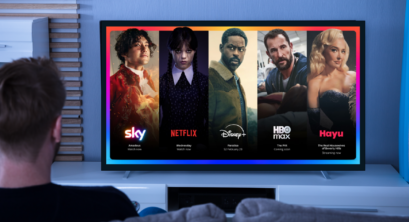
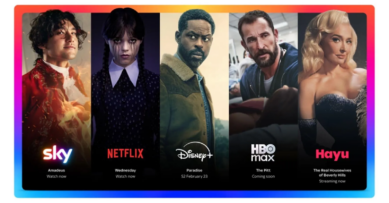
On February 11, 2026, Sky announced what it calls a world-first: four competing streaming services packaged together in a single TV subscription from £24 a month. Netflix, Disney+, HBO Max and Hayu sit alongside Sky Originals, integrated through Sky OS recommendations, Continue Watching and voice search.
Sky’s move is significant, a step forwards, but it isn’t isolated. Operators and platforms across regions and industries are converging on the same conclusion: multi-party subscription bundling drives acquisition, retention and revenue. The differences lie in strategy and scale.
Sky announced what it calls a world-first: £24 Sky Originals, Netflix, Disney+, HBO Max and Hayu
Fixed multi-party bundles: Sky packages four specific services at one price. Comcast’s StreamSaver does the same with three (Peacock, Netflix, Apple TV+) for $18 a month. The reseller chooses the services, negotiates wholesale rates and sets the retail price*. The customer buys the bundle as a fixed package.
Perk-based selection:Verizon’s myPlan lets customers choose from 15+ perks at $10 each. Netflix and Max together. The Disney bundle (Disney+, Hulu, ESPN+). FOX One. Apple One. The customer assembles their own bundle. Verizon manages content provider relationships and billing.
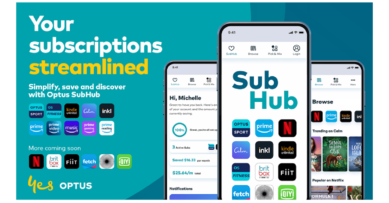
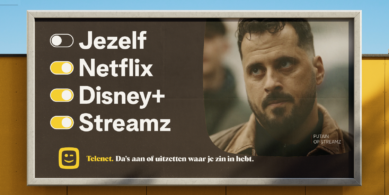
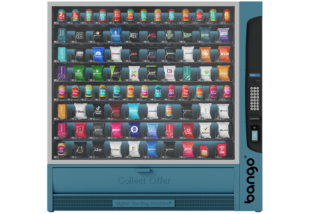
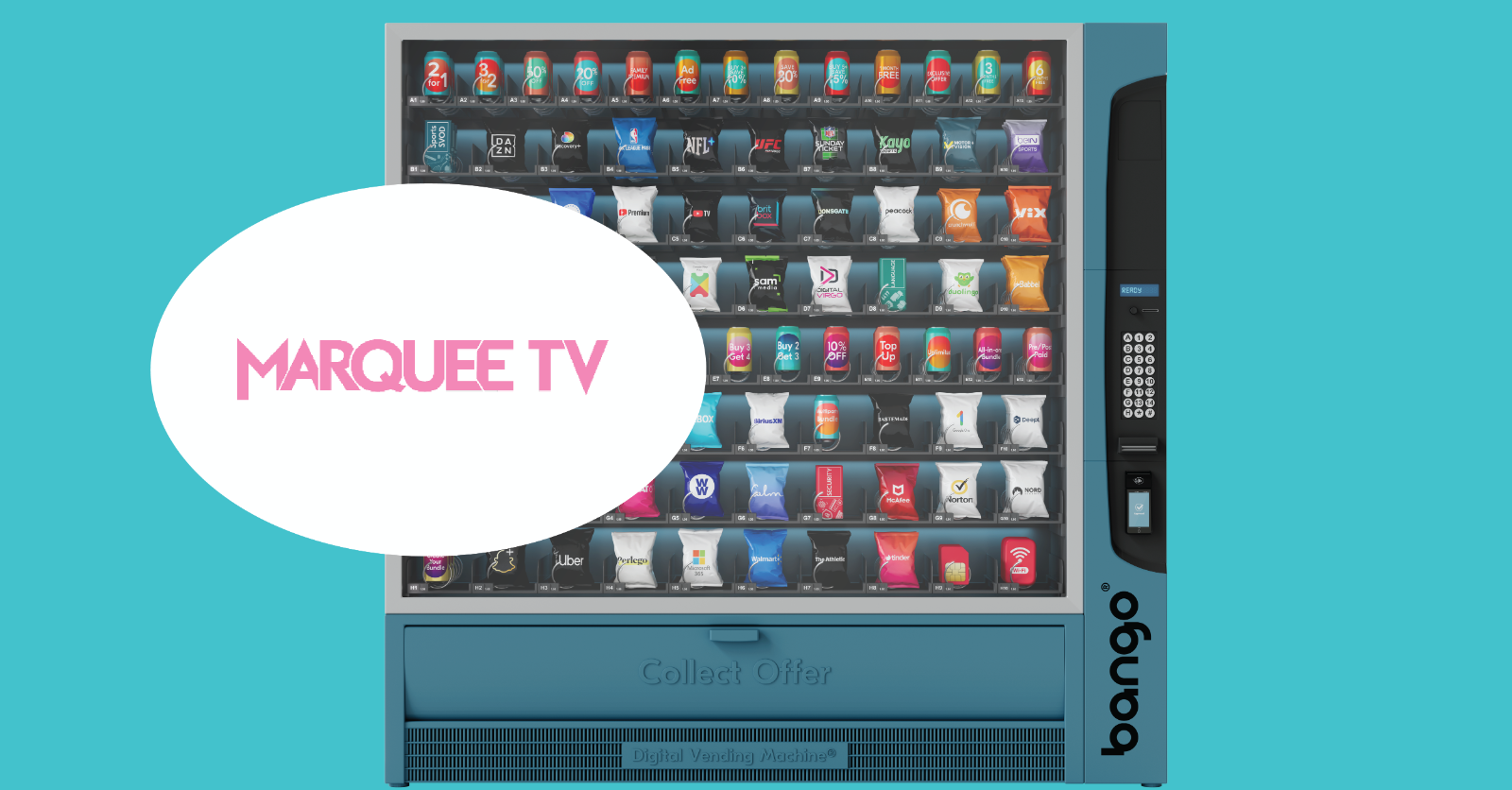
Subscription marketplaces: Optus in Australia built SubHub, where postpaid customers browse, activate and manage Netflix, Paramount+, Hayu, YouTube, Microsoft 365 and more through a single Optus bill. Telenet in Belgium launched an entertainment marketplace powered by the Digital Vending Machine from Bango, giving nearly 2M customers access to streaming subscriptions across TV, web, call center and retail channels. The customer controls which services they take. The operator provides the platform and billing.
* There are a few exceptions to this, most notably when a Reseller and content provider negotiate an affiliate style agreement.
Optus SubHub, over 20 services available for customers to add to bill, with discount
Super-aggregation: Charter (Spectrum) in the US, with their App Store, is packaging Max, Disney+, Hulu, Peacock, Paramount+, ESPN+, AMC+, Discovery+, BET+ and ViX into its TV Select packages at no extra cost, representing over $80 a month of retail streaming value. The bundle is the product.
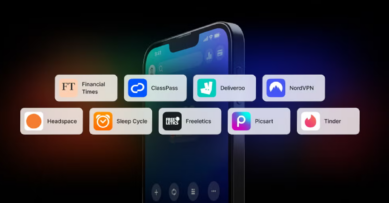
Cross-category bundling:Revolut bundles lifestyle subscriptions (Financial Times, WeWork, ClassPass, Tinder, NordVPN, Deliveroo) into its Premium, Metal and Ultra banking plans. EE in the UK bundles value-added services like Scamguard alongside core mobile connectivity. Bundling is not limited to telco, music or video streaming.
Revolut Ultra at £45 a month, includes £4,250 (annual) worth of subscriptions
Each approach reflects a different market position, different customer relationship and different commercial model. They share the same challenge of making the numbers work across multiple partners, each with their own economics and all parties achieving their top line business objectives such as acquisition, retention, ARPU or LTV.
Why operators keep investing in harder deals
The commercial negotiations behind these bundles are genuinely difficult. Getting Netflix and Disney+ into the same package means aligning companies that compete directly for the same subscribers. Each contract involves wholesale pricing, territory rights, tier structures, upgrade economics, data sharing and customer ownership.
Operators keep doing the work because the retention data justifies it. Bundling is rarely about standalone revenue. Its value shows up in retention, acquisition cost and lifetime value.
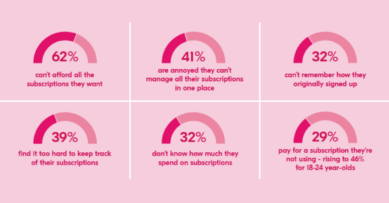
Monthly churn across streaming services has risen from 2% in 2019 to 5.5% by early 2025. Cost is the top reason people cancel, cited by 45% of departing subscribers. Also, findings from our recent subscriber report ‘Subscriptions Assemble‘ revealed that 62% can’t afford all the subscriptions they want, 32% can’t remember how they originally signed up and 39% find it too hard to keep track of their subscriptions.
In the UK specifically, 66% of subscribers believe there are too many subscription services, and 60% say they can’t afford all the ones they want. “Serial churners” who cancel three or more services within two years now represent 23% of the US streaming audience.
Content providers gain reach, even more with co-opetition: A subscriber who might churn from one service to try another stays on both instead. Lifetime value of a customer holding two services exceeds that of a customer rotating between them. The reseller channel delivers incremental reach without incremental acquisition cost.
Resellers gain contract leverage: Sky just announced broadband price rises of £3 a month and mobile rises of £1.50, both effective early 2026. Offering four streaming services from £24 a month makes a 24-month contract renewal far more compelling. The bundle becomes the reason to stay, not the broadband. Verizon’s CEO has said that bundled perks improve wireless customer retention alongside streaming retention.
Verizon’s Consumer Group CEO Sowmyanarayan Sampath told the Paley International Council Summit in 2023 that bundling streaming services through Verizon reduces churn by 60% to 70%. That figure is significantly above the industry-wide average of 34%, and it explains why Verizon continues to expand its perk portfolio.
Consumers get simplicity and savings: One bill. One interface. A lower total cost than subscribing separately. Consider the sports fan example. I’m a Nottingham Forest (Football) and Green Bay Packers (American Football, NFL) fan. A Nottingham Forest supporter needs Sky Sports for Premier League coverage and TNT Sports for Champions League. A UK based NFL fan following the Green Bay Packers needs Sky Sports, DAZN and Channel 5 to watch all their games. The number of services a fan needs keeps growing, and bundles are the only thing pulling them back into a single relationship (check out more examples on our recent blog: Six sports fans. Five countries. One subscription mess.)
Customer appetite for simplicity is clear. The challenge is making the commercial model work.
The commercial model: more variables than most teams expect
Product leaders evaluating a multi-party bundle face a commercial model with variables that interact in ways single-product launches don’t. Miss one, and the model breaks. The returns justify the effort when the variables are modelled correctly. But the modelling isn’t straightforward.
Wholesale economics across multiple content providers
Each content provider negotiates a different wholesale rate. Netflix doesn’t price the same way as Disney+. HBO Max doesn’t structure tiers the same way as Hayu. Some content providers offer volume-based pricing that improves as take-up grows, while others fix the wholesale rate regardless of scale. Ad revenue share is part of some agreements but absent from others.
Sky had to model the blended wholesale cost of four services, each with different rate structures, and determine whether £24 a month retail leaves a viable margin. Charter had to do the same across eight or more content providers bundled at no extra cost to TV Select customers. Verizon takes a different approach, offering each perk at a fixed $10 price point, which means each wholesale deal must fit within a known margin envelope.
For product leaders at other operators, this means the economics aren’t captured in one model. It’s a model per content provider, with a blended view that shifts as customers upgrade, downgrade or churn individual services within the bundle.
Offer design and take-up modelling
Why four services and not three? Why £24 and not £19?
The offer must balance competing pressures. Price it too high, and take-up is low, which means the fixed costs of launch spread across fewer customers. Price it too low, and margin disappears even at high take-up.
Beyond pricing, the composition of the bundle matters. Adding a fourth content provider increases the wholesale cost. Does the incremental retention benefit of four services over three justify that cost? The data suggests yes, because more services mean higher switching costs for the customer. The bundle also needs to cover enough of what the customer watches. A streaming bundle without a sports option, or without the one service a household treats as essential, will see lower take-up than the model projected. The relationship between services and retention isn’t linear. Each additional content provider adds cost and complexity and the marginal retention benefit of the fifth service may not cover the marginal wholesale cost.
This is where the strategic approaches differ and allows each reseller to have their unique differentiation in market. Sky and Charter bet on comprehensive multi-party bundles with many content providers. Verizon and Optus let the customer choose, which means take-up is distributed unevenly across content providers. Revolut bundles lifestyle services as a perk to justify premium plan pricing, where the take-up calculation is about plan upgrades rather than individual service adoption.
Sky’s announcement hints at its take-up strategy: existing customers get services added automatically. This reduces friction and pushes take-up higher. But it also means Sky absorbs the wholesale cost for customers who may never open the apps.
Cost to launch
Integration cost is the most visible expense, but it’s rarely the largest. Each content provider requires a technical integration for entitlement provisioning, authentication, billing and lifecycle management. Taken as a linear cost model, through a DIY integration, four content providers means four integrations. Eight content providers means eight.
Beyond integration, the launch costs include:
Legal and compliance review: Each content provider agreement needs legal sign-off. Territory rights, data processing agreements, consumer protection compliance. In the UK, Ofcom notification rules apply to price changes. In Belgium, Telenet operates across multiple regulatory environments. In the US, state-level consumer protection rules vary.
Marketing and go-to-market: Sky’s announcement was a coordinated launch across press, web and existing customer communications. Charter’s CEO described an 18-month timeline from programming agreements to full launch readiness. The cost of launching a super bundle goes well beyond a product page.
Support readiness: Support agents need to understand multiple new services, their tier structures, their common failure modes and their escalation paths. Training takes time, and the cost of getting it wrong is higher still. Agents who can’t resolve a bundled service issue on first contact generate longer calls, repeat contacts and churn that has nothing to do with the content itself.
Operational tooling: Can your existing systems handle the new offer? Or do you need new dashboards, new reporting, new reconciliation processes? The answer depends on your current platform maturity.
For many operators, the total cost to launch a multi-content provider bundle is significant enough that the retention benefit needs to be measurable and fast. A bundle that takes 18 months to pay back its launch cost is a harder internal case to make than one that breaks even in six months.
Retention is just one growth lever for multi-party bundling
Retention is probably the strongest single business case for multi-party bundles. A 34% reduction in churn applied to a base with 5% monthly churn saves significantly more customers than the same reduction on a 3% rate. Each retained customer avoids acquisition replacement cost. For a broadband operator spending £150 to acquire each new customer, the math compounds quickly.
But retention is not the only lever. The commercial model for multi-party bundling can generate returns across four distinct metrics, each with different payback profiles.
Retention: The most proven case. Bundled customers churn less. Telenet, operator in Belgium, saw a 26% reduction in churn among customers who took a bundle. The wholesale cost of the bundle needs to be lower than the revenue protected by keeping those customers. For a broadband customer paying £40 a month, six extra months of retention is worth £240. For a prepaid mobile customer at £10 a month, the same six months is worth £60. The same churn reduction produces very different revenue outcomes, so the viable wholesale spend differs by segment.
“The Bango DVM allows Telenet to deliver a variety of bundled offers, with customers controlling activation, deactivation and deals through a single bill.”
Ivor Micallef, Director of Product Entertainment at Telenet
Acquisition: A compelling bundle can attract new customers who would not have signed up for connectivity alone. Sky’s four-service package at £24 a month is designed to make a 24-month contract more attractive at the point of sale. Some operators take this further, using a hard bundle with a content provider included at wholesale rate for a year as a way to sell more mobile handsets at £1,000+. This approach works, but it can be short-sighted. It treats the bundle as a one-time acquisition incentive rather than an ongoing commercial relationship with the content provider. If the model doesn’t account for what happens when the included year ends, the operator faces a renewal cliff.
ARPU (average revenue per user): Bundles can increase ARPU directly. A customer paying £30 for broadband who adds a £24 streaming bundle is now generating £54 a month. Even after wholesale costs, the net ARPU uplift can be meaningful. Verizon’s $10 perk model is explicitly designed this way. Each perk adds incremental revenue on top of the wireless plan. When a customer takes a service with adds, upselling to a premium tier gives net ARPU uplift. A Sky customer taking the Ultimate TV Bundle gets Netflix standard with Ads. A customer upgrading to Premium tier adds an additional £14 per month to ARPU. Making the upgrade customer journey accessible to customers drives a stronger business case.
LTV (lifetime value): LTV combines the effects above. A customer who stays longer (retention), pays more per month (ARPU) and was cheaper to acquire (acquisition efficiency) has a significantly higher lifetime value. The bundle doesn’t need to be profitable in isolation if it drives LTV across the full customer relationship. In some models, the bundle operates as a loss leader. The wholesale cost exceeds the direct bundle revenue, but the indirect benefits to contract length, plan upgrades and reduced churn more than compensate.
Whether third-party bundles could become a standalone revenue stream is worth addressing. In theory, the margin between wholesale rate and retail price could generate profit on its own. In practice, the margins are thin. Wholesale rates from major content providers like Netflix and Disney+ leave limited room, especially when the bundle is priced to be attractive against direct subscriptions. Few operators can build a standalone P&L on bundle margin alone. The value almost always sits in how the bundle affects the core business metrics.
The payback calculation is specific to each operator. It depends on which of these levers matters most, which segment you’re targeting, and how much wholesale cost you’re prepared to absorb. No single formula covers every operator. But the commercial model needs to account for all four metrics, not just one.
This post has covered the variables individually. The harder question is how they interact for your specific operator, subscriber base and target segment. Bango works with operators and content providers to model the business case for bundling and multi-party bundling. The framework maps four input layers to four viability metrics, and it can be used to test assumptions across wholesale economics, take-up rates, launch cost and payback timelines. This capability is also being built into the Bango DVM itself, so product teams can model and compare scenarios directly within the platform as their bundling strategy evolves.
Why most operators start with one content provider
The journey typically isn’t “launch a mega-bundle on day one.” Most operators start with a single content provider partnership. There are three reasons for this, and they are commercial, not technical.
Negotiation timelines are long: content provider agreements involve wholesale pricing, territory rights, tier structures, data sharing and customer ownership. These deals take months to close. Most operators don’t wait for four agreements to complete before going live. They launch with one content provider and negotiate the next deal in parallel.
Belief in bundling isn’t universal: Despite trends and market news, not every leadership team has full confidence in the bundling business case before they see results of their own. Starting with one content provider allows the operator to measure take-up, churn impact and ARPU effect against real data. That data then strengthens the internal case for the second and third partnership.
Some operators have a narrower initial model: A common starting point is the hard bundle: include a content provider at wholesale rate for 12 months as part of a handset or broadband contract. This is a valid acquisition play, but it tests only one lever (acquisition) in one scenario (contract sign-up). It doesn’t prove the broader commercial model for ongoing bundling, in-life upsell or multi-content provider economics.
Each addition is validated against the commercial model before the next partnership is pursued. The operators who reach super bundles fastest are those whose platforms allow them to test, learn and expand without rebuilding integrations or remodeling offers from scratch.
Viability risk in operations: where the commercial model meets reality
Even with a strong commercial model, the returns only materialize if the operational platform can execute. This is viability risk, as Marty Cagan defines it: not just “do customers want it?” but “does it work for your business over time?” And “can customers use it?” Without the right infrastructure, bundles at this scale risk creating friction instead of loyalty.
For multi-party bundles, three in-life management risks directly affect the financial model.
Price changes across multiple parties
A few years ago, subscription prices barely moved. That world is gone. Netflix raised its ad-supported tier by $1 in January 2025. Peacock went from $7.99 to $10.99 in July 2025. Apple TV+ rose by $3 in August 2025. Comcast’s StreamSaver, launched at $15, moved to $18 by December 2025. That’s three price changes from three partners in seven months, all flowing through to one bundle.
Each content provider price change triggers a cascade. Your wholesale cost changes. Your retail margin shifts. Your billing system recalculates. In the UK, Ofcom rules give customers 30 days from notification to leave penalty-free, so a price increase can directly trigger the churn the bundle was designed to prevent.
Now multiply across four, eight or fifteen content providers. Each with their own pricing cycle. The pricing change strategy is even more complicated.
For new customers, the path is relatively clear: Update all catalog and price engine entries. Update the website. Clear any in-progress baskets that prospects have open. Roll the new pricing into the standard acquisition flow. This can happen quickly, provided the platform supports configuration-driven price updates rather than code changes.
For existing customers, the complexity escalates fast: Consider a customer who took the bundle at its original price and then upgraded one service within it. What is their new total? The billing system needs to calculate the price change on the base bundle, layer the upgrade differential on top, and present a single coherent bill.
Then consider a customer still in a free trial phase. When does the price change take effect for them? At the end of trial? At the next billing cycle after trial ends? Each content provider may have a different contractual answer to that question, and the reseller’s billing system needs to reflect all of them.
Finally, billing cycles across services within one bundle may not align. One service bills on the 1st of the month. Another bills on the 15th. A price change from one content provider lands mid-cycle for some customers and at cycle start for others. The billing system needs to handle pro-rating, cycle alignment and clear customer communication for each permutation.
If your platform can process price changes from multiple partners on different cycles without requiring engineering sprints, the margin stays protected. If it can’t, every price change becomes a project that erodes the projected return.
In-life changes at the individual service level
Sky’s announcement reveals the operational depth. Existing Disney+ customers can move their plan to Sky, keeping profiles and watch history. Customers can upgrade from Disney+ Standard with Ads to Premium, with the base cost deducted. HBO Max subscribers can upgrade to higher tiers.
Consider one scenario: a customer upgrades Disney+ from Standard with Ads to Premium while keeping HBO Max at Basic. That’s a change to one service within a four-service bundle. The billing system needs to reflect a partial upgrade. The content provider needs to flip the entitlement. The customer’s next bill needs to show the change clearly.
Optus faces this at marketplace scale, where customers can add, remove and change individual services at any time. Verizon faces it when a customer upgrades their Netflix tier within the Netflix+Max perk. The operational challenge is the same: a change to one service within a multi-service relationship must flow through billing, entitlement and support systems without manual intervention.
In-life changes that require manual handling add support cost and billing errors drive customer contacts which cost money and risk churn. If your platform handles partial upgrades automatically, flexible bundling works at scale. If it doesn’t, in-life changes become an operational tax that slowly degrades the economics.
Supportability across party boundaries
When a customer calls Sky and says, “my Disney+ isn’t working,” whose problem is it? When an Optus SubHub customer can’t activate their Netflix subscription, who resolves it? When a Verizon customer’s Max entitlement doesn’t carry over after a plan change, where does the call go?
The customer sees one bundle, one provider and one bill. The organization sees multiple content platforms, multiple entitlement systems and different escalation paths.
Support calls for bundled services cost more than single-product calls. 3rd party support calls cost more than 1st party because you don’t own the product, you’re not the expert. Each cross-party investigation takes longer to resolve, and unresolved issues drive churn that damages the brand of whichever party owns the customer relationship.
Product teams own this. Addressing it means mapping every customer journey that crosses a party boundary: activation, authentication, playback failure, billing dispute, upgrade, cancellation, plan migration. Then ensuring support teams have the tools and visibility to resolve issues without sending customers between organizations.
If your platform provides clear entitlement visibility across all partners, support costs stay manageable and the retention benefit holds. If it doesn’t, support overhead erodes the margins that justified the deal.
How the Digital Vending Machine from Bango de-risks the business case
The commercial case for multi-party bundling has real potential. The acquisition and churn data confirms it. The market is converging on it across telco, media, banking and beyond. But the number of variables, the cost to launch, and the operational complexity create genuine risk that the returns won’t materialize.
The Digital Vending Machine from Bango is built to reduce that risk at every stage. The Bango DVM already powers subscription bundling for Verizon, Optus and Telenet, each with a different strategic approach. Fixed multi-party bundles, perk-based selection and subscription marketplaces all run on the same platform.
Reduce cost to launch: The Bango DVM provides a single integration point for multiple content providers. Rather than building separate integrations for each content provider’s entitlement, billing and lifecycle management systems, operators connect once to the Bango DVM. Each new content provider uses the same integration pattern. This directly reduces launch cost and reduces the time to add a second, third or fourth partner as the commercial model proves out. Charter’s CEO described an 18-month timeline from agreements to launch. A platform business model compresses that timeline for every content provider after the first.
Enable faster iteration on the commercial model: The Bango DVM offer object maps directly to commercial agreements. Product and commercial teams can model new offers, adjust pricing, add or remove services and launch variants without requiring custom engineering or complex mapping to BSS catalogs. The iterative process of “prove with one content provider, learn, expand” moves from a six-month cycle on a custom-built platform to weeks on the Bango DVM.
Handle price changes without engineering sprints: When a content provider changes its market rate, the Bango DVM processes the change through offer and billing configuration. No code deployment. No product increment planning and opportunity cost debates. The margin impact flows through to reporting immediately, giving commercial teams real-time visibility into how the change affects the economics. Consider the Comcast StreamSaver scenario: three partner price changes in seven months. On a DIY platform, each change requires a sprint. On the Bango DVM, each is a configuration update.
Process in-life changes automatically: Upgrades, downgrades and plan migrations across individual services within a multi-service bundle are handled at the platform level. No manual intervention. This matters commercially. The Sky Ultimate TV bundle includes Netflix Standard with Ads. A customer upgrading to Netflix Premium adds £14 a month to ARPU. If that upgrade requires a support ticket or manual billing adjustment, the cost erodes the gain. If the platform handles it automatically, the upsell revenue flows straight through.
Provide cross-partner visibility for support: The Bango DVM gives support teams a single view of entitlement status across all content providers in a bundle. When a customer calls Sky and says, “my Disney+ isn’t working,” the customer service agent can see the entitlement state, the billing status and the activation history across all four services without switching systems or escalating to Disney. The call resolves faster, costs less and doesn’t generate the churn that poor support experiences create.
The net effect is that the Bango DVM doesn’t just handle the IT integration complexity. Its end-to-end support for subscription bundling means in life and launch costs are optimized. The Bango DVM improves the economics of the commercial model. Lower launch cost accelerates payback. Faster iteration gets you to the right offer sooner. And because in-life changes are automated, support costs stay low enough that the retention gains from bundling flow through to profit rather than being absorbed by operational overhead.
Where multi-party bundling goes next
The operators and their platforms covered in this post are building on a model that has taken shape over the past five years. The next phase will look different. Four shifts are already emerging.
AI subscriptions enter the bundle: Bundling has been dominated by media: streaming video, music, gaming. That domination is changing and AI-powered services are the fastest-growing subscription category. They follow the same distribution logic as streaming. Consumers want access, operators want differentiation and content providers want reach. Bango research in The rise of the AI subscriber shows the data behind this trend. AI subscriptions are not a niche add-on. They are becoming a core component of bundle propositions alongside entertainment and lifestyle services.
Content provider consolidation won’t simplify the technology stack: The wave of media consolidation, Netflix’s acquisition of Warner Bros. Discovery being the most prominent, will reduce the number of wholesale partners operators negotiate with. Fewer commercial relationships sounds simpler. In practice, the technology stack consolidation will have a much longer tail. Merged content providers will continue to operate separate entitlement systems, separate billing integrations and separate tier structures for years after a deal closes. The operational complexity that this post describes, price changes across multiple systems, in-life upgrades across different entitlement platforms, cross-party support, will persist even when two content providers share the same parent company. Operators who assume consolidation will reduce cost are likely to be disappointed.
Subscription business models are shifting from recurring access to outcomes: The standard model for bundled services has been monthly recurring revenue: the customer pays a fixed amount each month for access. That model is evolving. AI-based services are increasingly priced around outcomes rather than access. Add-on and usage-based models, such as DAZN’s pay-per-event sports or Lovable’s credits-based vibe coding, are becoming more common across categories. This introduces a new variable for bundle economics. A bundle that includes outcome-based or moment-based services will challenge the model that works for a bundle of fixed-price subscriptions. The wholesale cost isn’t fixed. The customer’s usage pattern determines the margin. Product teams evaluating future bundles will need products that can handle hybrid commercial models, not just flat monthly rates.
Distribution channels are becoming essential for launch success, not optional for scale: When FOX launched FOX One, it launched through Verizon’s myPlan as a $10 perk. The channel wasn’t an afterthought for incremental reach. It was central to the go-to-market strategy. This pattern will accelerate. New content providers, particularly in AI and specialist content, will treat operators and channels as primary launch partners rather than secondary distribution. The commercial models will reflect this, with more flexible terms, less geographic restriction, and less concern about cannibalization of existing direct subscribers. For operators, this means more content providers will be available for bundling, with commercial terms that are more favorable than the long-negotiated deals with Netflix and Disney+. For products like the Bango DVM, it means supporting a wider range of commercial models and a faster pace of new content provider onboarding.
The common thread in these four shifts is that the variables in the commercial model are getting more complex. More service categories, longer technology tails from consolidation, hybrid pricing models and channel-first launches all add complexity to the offer design, billing and in-life management challenges covered so far in this post. The operators who are already operating on a product built for multi-party bundling will adapt faster than those still managing individual integrations.
The Bango DVM is what connects partnership ambition to financial return
Sky, Verizon, Charter, Optus, Telenet, Comcast, Revolut. The list of operators and platforms pursuing multi-party subscription bundling grows every quarter. The strategic approaches differ but the commercial complexity is consistent across all of them.
Between the market opportunity and the financial return sits a commercial model with real variables: wholesale economics across multiple content providers, offer design trade-offs, launch investment, take-up modelling and retention payback. Then, once live, the ongoing operational cost of price changes, in-life management and cross-party support.
The operators who capture this opportunity fastest will be those who can prove the model quickly, scale it efficiently and protect their margins as the bundle evolves. That requires a platform purpose-built for multi-party subscription bundling.
That’s what the Digital Vending Machine from Bango delivers. A stronger commercial case by reducing the risk at every stage, not just the integration. The Digital Vending Machine from Bango powers subscription bundling for operators and content providers worldwide, including Verizon, Optus and Telenet (read the full case study here).
See how the Bango DVM de-risks the commercial model for multi-party bundles