

Switching the play: sports streaming’s tipping point
- Sports streaming has gone mainstream. Nearly two-thirds of Americans (64%) pay for a Sports SVOD subscription in 2026.
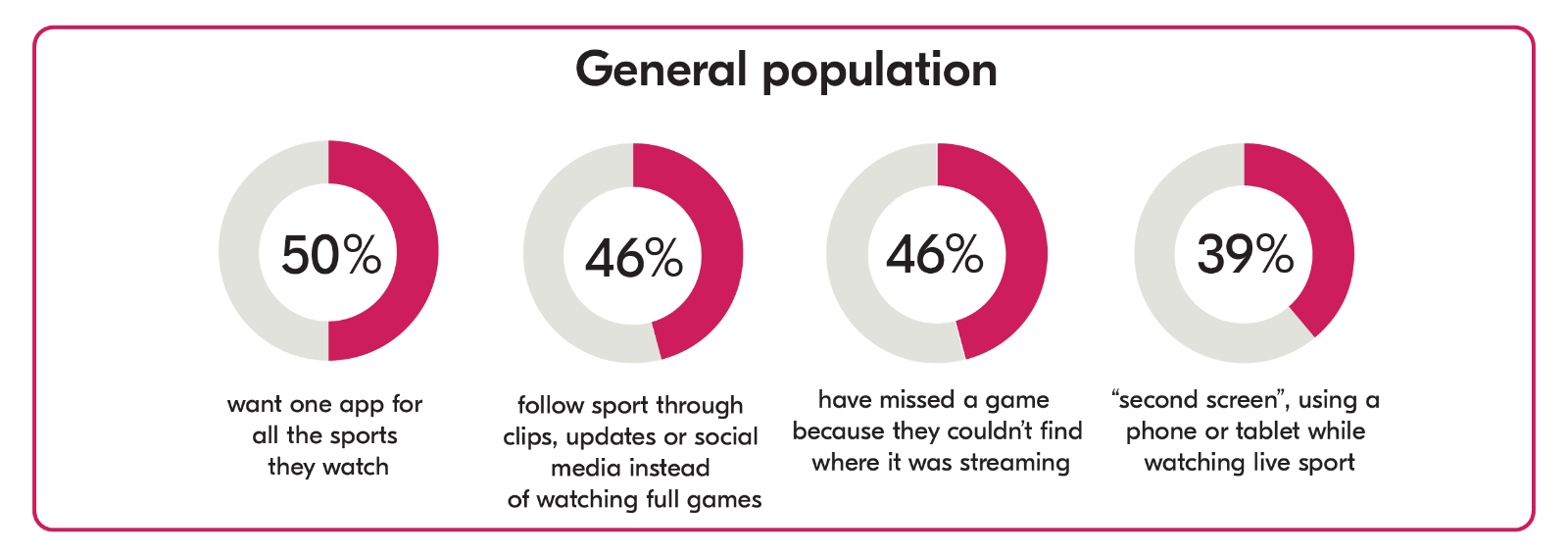
- Fragmentation is creating confusion. Nearly half (46%) of Americans have missed a game because they couldn’t find where it was streaming, while two-fifths (41%) don’t know where to watch the 2026 FIFA World Cup.
- Viewing habits are changing. Almost half of Americans (46%) now follow games through clips, updates or social media instead of watching the whole game.
- Some fans are leaving paid channels altogether. Three in ten Americans (30%) believe piracy is the best way to stream sports.
- Consumers want a simpler experience. Half of Americans (50%) want one app for all the sports they watch, while 53% would rather get sports streaming through their mobile, broadband or TV provider than manage multiple subscriptions themselves.
- Bundling creates a competitive advantage. More than four in ten Americans (43%) would switch mobile, broadband or TV provider if another provider offered a better sports streaming bundle.

Subscription Snapshot is our quarterly look at the consumer trends reshaping the US subscription economy. As the sporting world looks ahead to the largest FIFA World Cup in history, Bango surveyed 2,500 US consumers to understand how sports streaming habits are evolving. The findings reveal a market enjoying unprecedented popularity, with 64% of Americans now paying for a Sports SVOD subscription.
But beneath the headline growth lies a growing problem.
Sports rights are increasingly fragmented across platforms, forcing fans to piece together access through multiple subscriptions.
Among Sports SVOD subscribers, 29% primarily subscribe to watch one specific league, tournament or event, while 28% subscribe mainly to follow a particular team. Another 15% subscribe for one specific sport, while 15% subscribe simply for access to live sports regardless of what’s on. A further 13% mainly subscribe for one sport but stay because other sports are included.
With this growing complexity also comes frustration for fans. Half of Americans (50%) say they want one app for all the sports they watch.
The result is a market approaching a tipping point, where the challenge is no longer persuading consumers to stream sport, but helping them navigate an increasingly fragmented ecosystem without becoming overwhelmed by the number of subscriptions and services required. In short, they’re looking for someone else to simplify the experience.
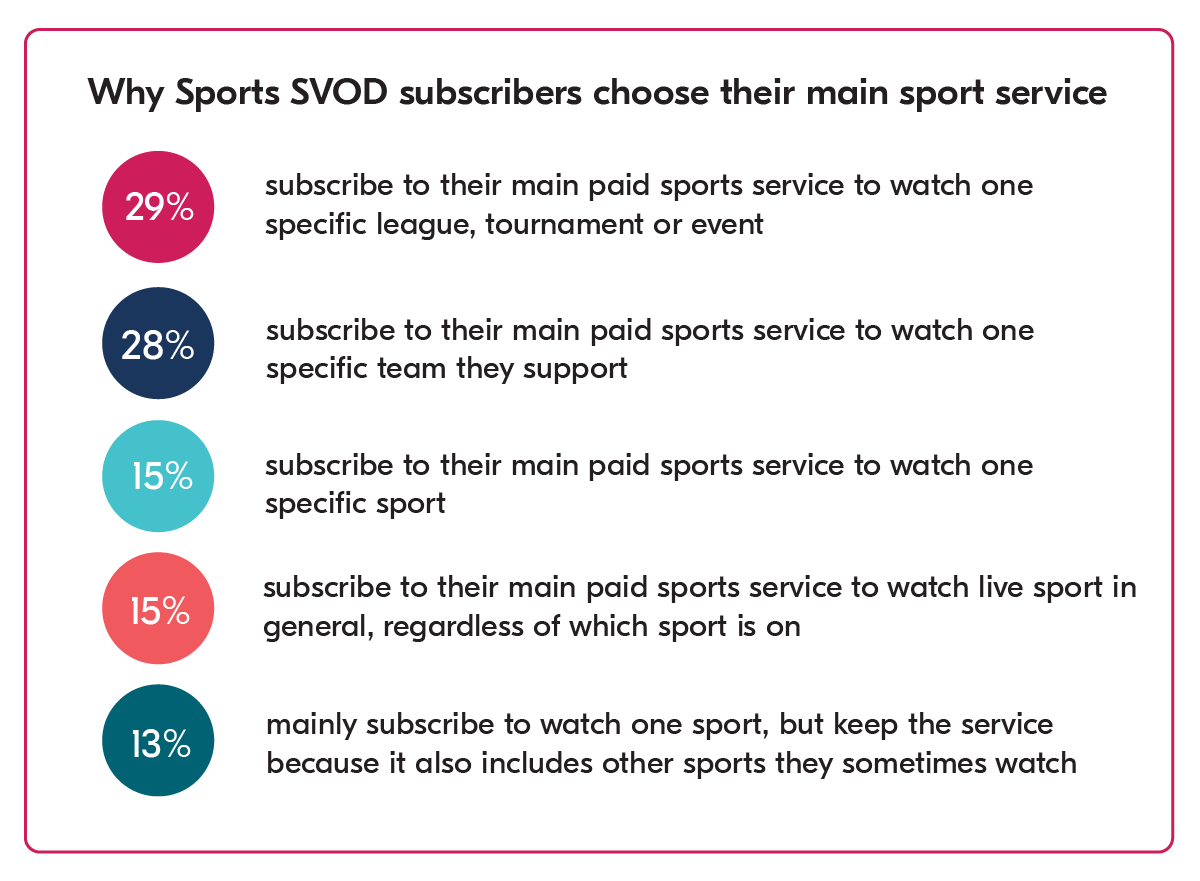
The data also suggests that sports fans are often subscribing for something highly specific, whether that’s a particular league, tournament, event or team. This helps explain why fragmentation has become such a challenge: fans may be willing to follow content across different services, but become frustrated when access to the competitions they care about is spread across multiple subscriptions.
As sports rights become increasingly fragmented, fans are being forced to assemble their own streaming experience across multiple subscriptions.
More than a quarter of Americans (27%) say they need at least three paid subscriptions to watch all the live sports they follow. Three in ten (30%) also worry they subscribe to “too many” different sports streaming services.
To help pay for all these services, 32% now regularly subscribe for a single season and then cancel once it ends. That’s a huge volume of churn for a sector famously built around the long-term loyalty of fans.
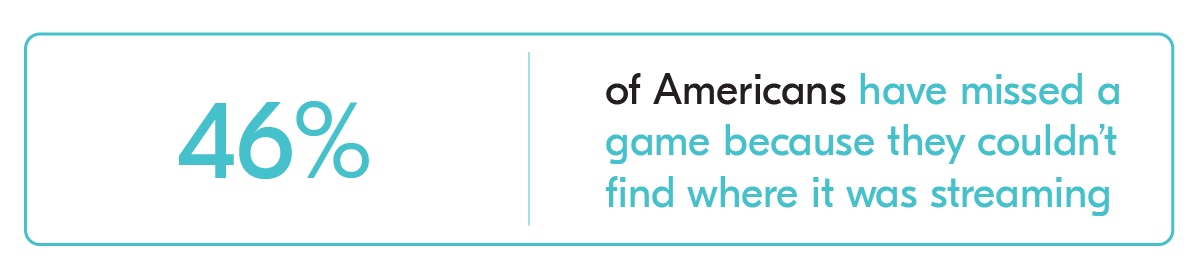
This complexity is making sports harder to navigate. Nearly half of Americans (46%) have missed a game because they couldn’t find where it was streaming, while 46% have missed part of a game for the same reason.
That confusion extends even to the biggest events. Despite the 2026 FIFA World Cup being one of the most anticipated sporting tournaments in the world, 41% of Americans still don’t know where they can watch it. (For those who want to know, a full list of where you can stream all the games is available here)
What emerges is a market where access is becoming as important as content. Fans remain highly engaged and willing to pay for the sport they love, but they’re increasingly being asked to manage the burden of finding, tracking and paying for it. As sports streaming matures, simplifying that experience may become just as important as securing the rights themselves.
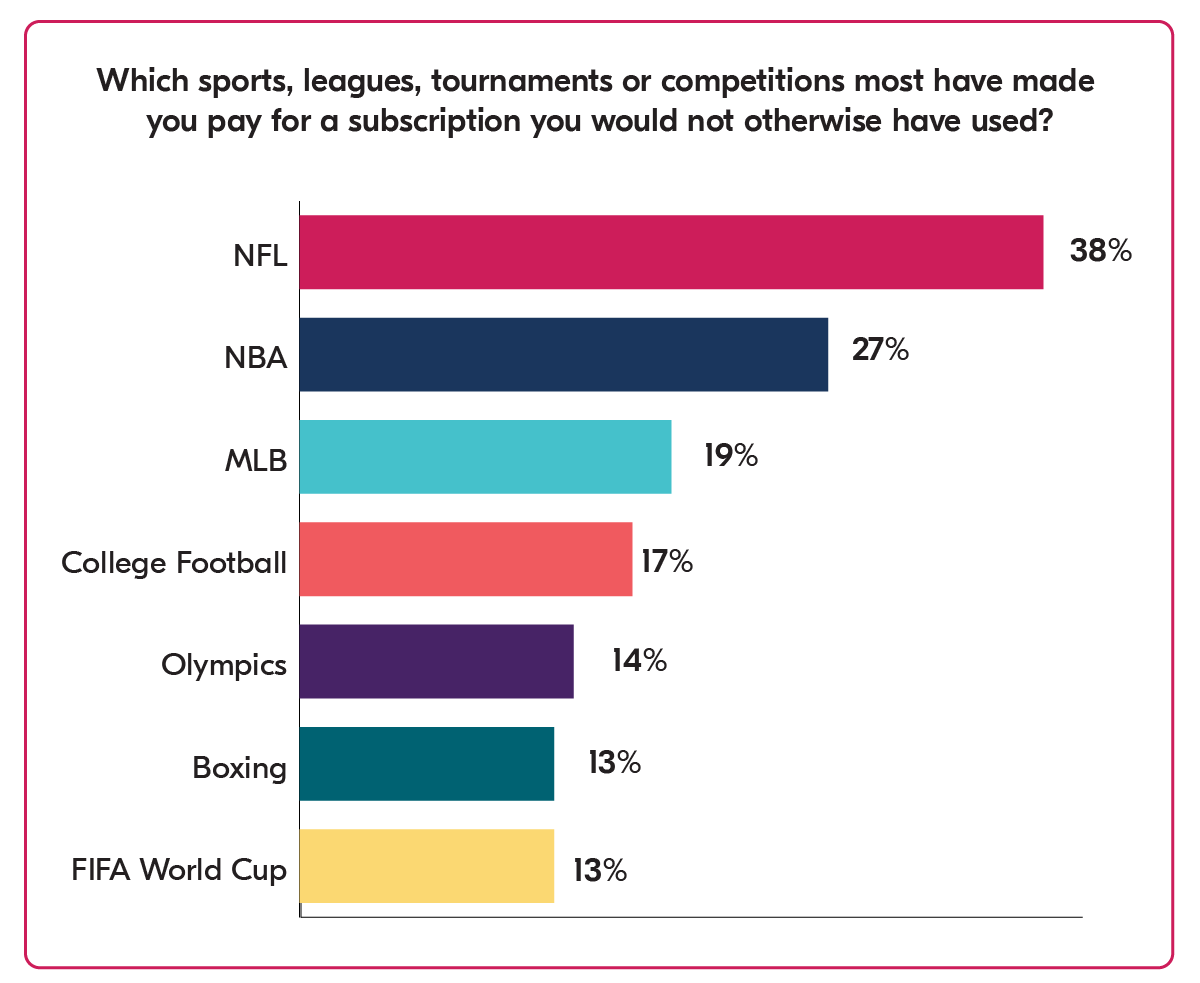
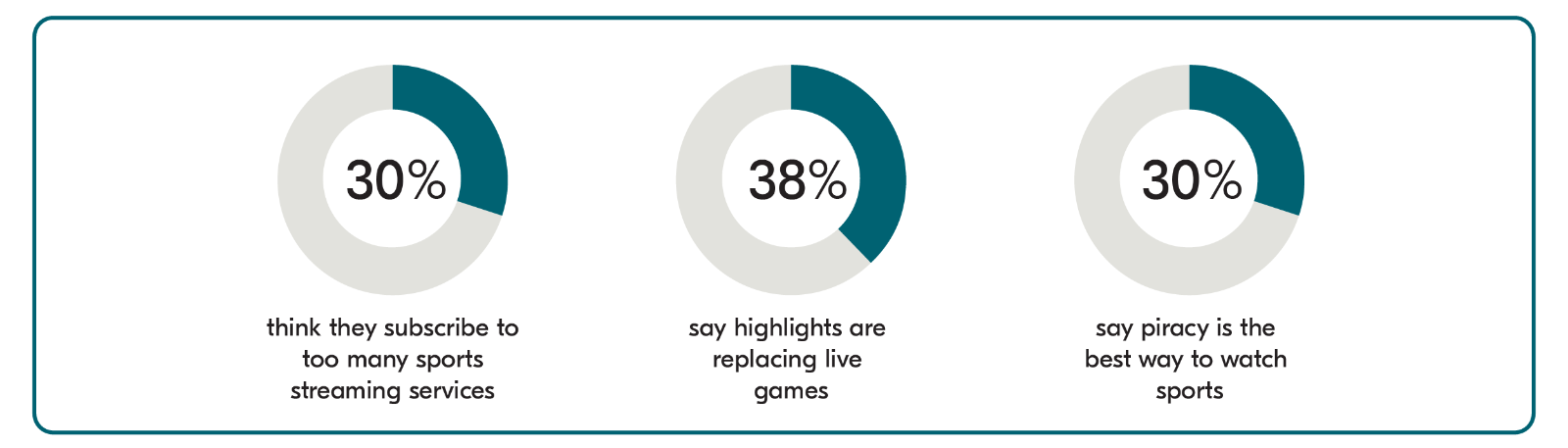
A useful way to understand where a market is heading is to look at how younger consumers behave. In sports streaming, the trends seen across the wider population are even more pronounced among younger audiences. They are more likely to want a single destination for sport, more likely to miss games because they can’t find where they’re streaming, and more likely to follow games through clips, highlights and social media instead of watching live.
As these consumers become a larger share of the market, convenience and simplicity are likely to become increasingly important expectations.
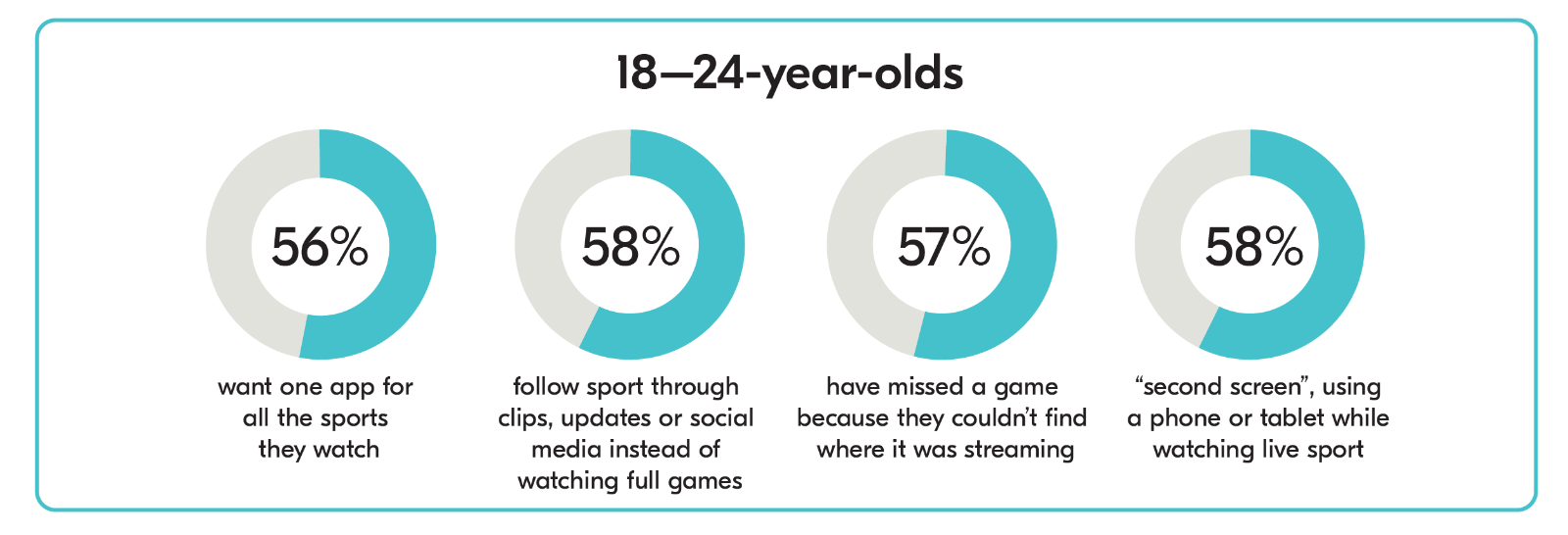
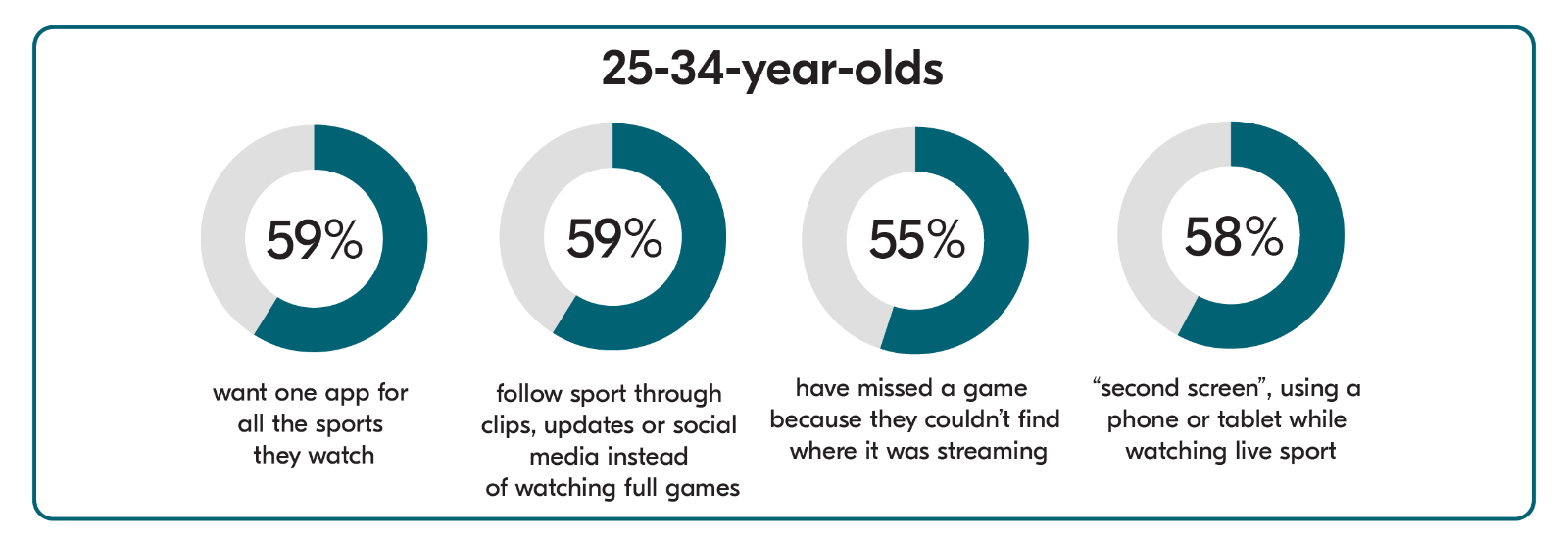
Consumers have made it clear they want a simpler way to access sport, and telcos are well placed to provide it.
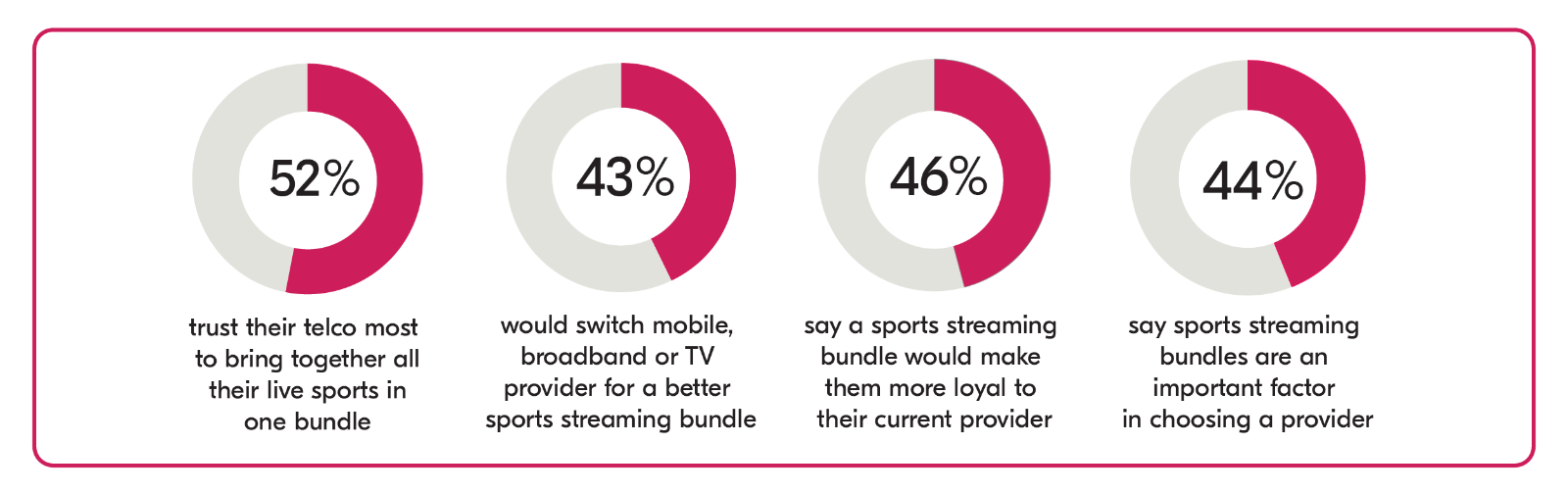
When asked who they would trust most to bring together all the live sports they care about into a single bundle, 52% chose their telco. That trust likely stems from an existing customer relationship. Unlike individual streaming services, telcos already manage multiple aspects of consumers’ digital lives, making them a natural choice to simplify access across an increasingly fragmented sports landscape.
More than half of Americans (53%) say they would rather get sports streaming through their mobile, broadband or TV provider than manage multiple subscriptions themselves. By comparison, just 24% would most trust an entertainment streaming service they already use.
As sports rights become more fragmented, consumers are increasingly looking for a simpler way to discover, access and manage the content they want. Bundling offers a way to reduce that complexity by bringing multiple services together through a single relationship and customer experience.
The opportunity extends beyond convenience. Throughout this report, we’ve seen consumers responding to fragmentation by cancelling subscriptions between seasons, turning to highlights and social media instead of live viewing, and in some cases leaving the paid ecosystem altogether.
The commercial upside is significant. Almost half (43%) of Americans would switch providers for a better sports streaming bundle. 46% also say a sports bundle would make them more loyal to their current provider, while 49% would be more likely to recommend a provider offering a strong sports package. Sports is also influencing provider choice, with 44% saying sports streaming bundles are becoming an important factor when choosing a provider, while 48% would consider switching if they lost access to the sports they care about.
Consumers are actively looking for someone to solve the fragmentation problem. And that’s where we come in. Through the Digital Vending Machine® from Bango, telcos can bring together sports streaming, entertainment subscriptions and other digital services into a single customer experience. Consumers get simpler access to the content they want, while providers strengthen loyalty, differentiation and retention. Sports streaming has reached a tipping point. The winners will be the companies that make it easier for consumers to find, buy and manage the content they love.
See more
This report is based on Bango research conducted among 2,500 US consumers and presented at StreamTV.
Download the complete finding from this page, including an infographic, additional charts, demographic analysis and deeper insights into the future of sports streaming, subscriptions and bundling.
Methodology
Bango commissioned this research using the independent research agency 3Gem. The research was conducted and launched between May and June 2026 using a sample of 2,500 American consumers.