Retail’s increasing role in the subscription economy
by Giles Tongue | 29 Apr 2026
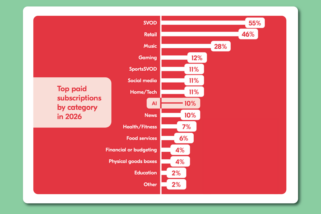
Retail is now the second biggest paid subscription category.
Ahead of music.
Ahead of gaming.
Ahead of sport.
Ahead of news.
So what does retail have to do with subscriptions?
Everything.
We’ve moved a long way beyond the days when most people found a subscription by going to an app store, downloading an app, and paying direct.
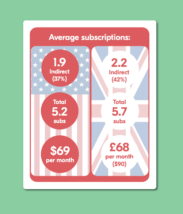
According to our latest Subscription signals 2026 survey, consumers now have nearly six subscriptions on average, and around 40% are coming through bundling and indirect channels.
The most curious thing in the report was how often retail appeared in the data.
We surveyed 4,000 consumers across the US and UK. The most popular paid subscription category was streaming video: Netflix, Disney+, Amazon Prime Video, HBO Max, and others.
The second most popular was retail.
That may feel surprising at first.
When people think about subscriptions, they often think about entertainment, software, music, sport, or gaming. Retail does not always come to mind first.
But it should.
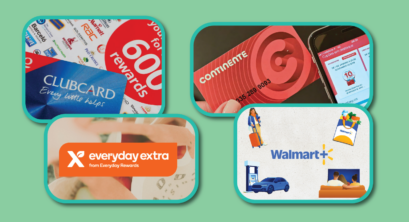
Retail subscriptions include obvious examples such as Amazon Prime. They also include paid loyalty schemes from bricks-and-mortar retailers, such as Walmart+ in the US, Tesco Clubcard+ in the UK, Cartão Continente in Portugal and Woolworths Everyday Extra in Australia.
These schemes usually give customers points, discounts, delivery benefits, fuel savings, or other perks across online and in-store purchases.
And that is why retail is not the same as the others.
People may cancel an entertainment subscription when budgets tighten.
They still need groceries.
They still need household goods.
They still need delivery, discounts, and everyday value.
Retailers are becoming bundlers
The retail story became even more interesting when we asked subscribers where they get their bundles of subscriptions from.
Retail came second only to telco.
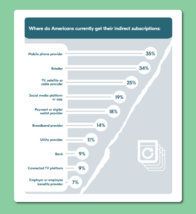
Retailers already have frequent customer relationships. They have loyalty schemes, payment relationships, purchase history, stores, apps, and huge reach into everyday life.
Now, many are adding subscription bundles into that mix.
Walmart+ is a good example. It includes access to a choice of Peacock or Paramount+.
Why would a retailer add streaming into a retail subscription?
Loyalty.

Subscriptions are a proven way to build stronger customer relationships. In our Telenet case study in Belgium, customers who took an extra subscription service from the MyTelenet marketplace were 26% more loyal to Telenet. It reduced churn and increased retention.
The same logic applies in retail.
A retail subscription can make customers more likely to return, spend, and stay inside the retailer’s ecosystem.
It can also make the subscription itself look like better value.
Walmart+ costs $12.95 per month. Included in that is access to a streaming service that would otherwise carry its own monthly cost.
A choice of Paramount+ Essentials is worth $8.99 / month or Peacock Premium $10.99 / month. (Customers can also then upgrade to Paramount+ Premium (no ads): $5.49/month or $54.49/year).
For regular Walmart shoppers, that makes the membership feel like a more rational decision.
For Walmart, the benefit is repeat custom, richer shopper data, extra revenue, and a stronger loyalty relationship.
For the streaming service, the benefit is distribution and subscriber growth.
That is the power of bundling.
Amazon Prime showed what retail subscriptions could become
Amazon remains the clearest example of retail, subscriptions, and bundling working in one place.
Amazon Prime membership starts with a simple promise pay a monthly fee ($14.99) to get delivery benefits.
But it became much more than that.
Today, Prime combines delivery, entertainment, shopping perks, and access to Prime Video, Amazon’s Subscription Video on Demand service.
Prime Video then opens the door to Prime Video Channels, where customers can add additional subscriptions from the world’s leading SVODs – over 200 services are now available including giants like AppleTV, Paramount+ and Crunchyroll.
That is the bigger retail subscription model.
Not just one subscription.
A subscription hub.
Retail and super bundling
This is where retail connects to Super Bundling: multiple services paid for and managed in one place.
For consumers, this helps reduce the mess of managing subscriptions across multiple apps, accounts, payments, and renewal dates, which leads to subscription fatigue.
For retailers, it creates a stronger loyalty product.
For subscription brands, it creates a new distribution channel.
And for the wider subscription economy, it points to a future where retail is no longer just the seller of goods. It becomes a subscription marketplace.
Consumers now have nearly six subscriptions on average. Around 40% are coming through indirect channels.
Retail is growing as a bundler and as a subscription category in its own right.
That combination is important.
Retailers can offer their own paid memberships.
They can bundle third-party subscriptions.
They can use entertainment, delivery, savings, and loyalty to keep customers closer.
The subscription economy used to be led by apps, media, and direct-to-consumer brands.
The next phase may be led by the companies people already shop with every week.